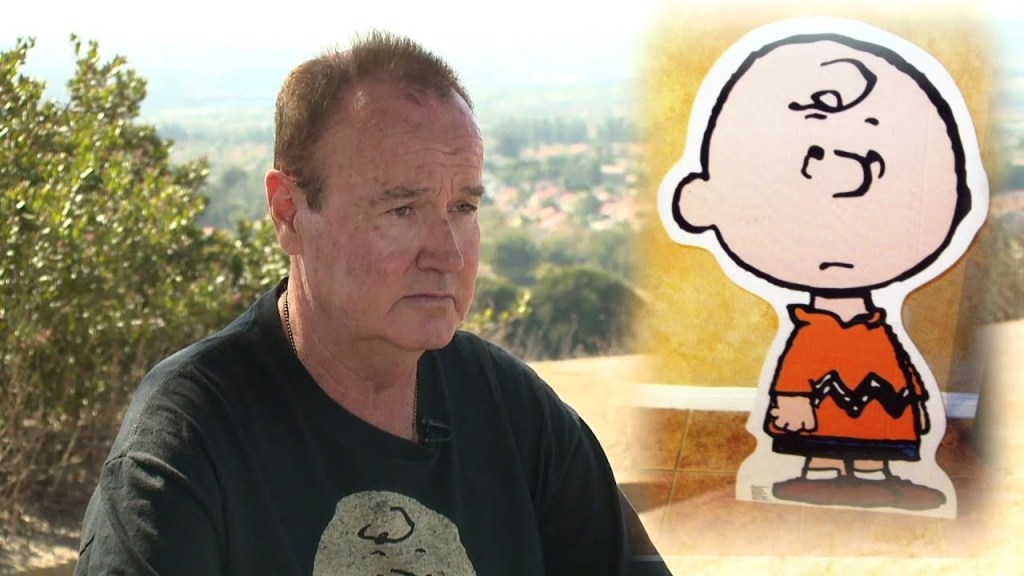
Today is National Grief Awareness Day. It was formerly known as National Bereavement Day. Apparently, we need to be reminded of people who grieve, and August 30 was the day chosen to raise awareness about the experience of grief. In fact, there are some websites announcing that this is the day we “celebrate” Grief Awareness Day.
National Grief Awareness Day comes one day before National Child Identity Theft Awareness Day and one day after National Lemon Juice, National More Herbs Less Salt and National Chop Suey Day.
Lemon Juice/More Herbs Less Salt/Chop Suey … Grief … Child Identity Theft Awareness. That’s quite the trifecta.
Today is the day that counselors, therapists, psychologists and psychiatrists may delve deeply into the five stages of grief.
And yet, we know that grief is as individual as our fingerprints. For some, grief destroys. For some, it lingers hauntingly defining that person in harmful ways. For others, it may fill them with incredible purpose and resolve. Regardless, let’s see if we can squeeze that pesky grief into five (5) easy to understand categories.
Mental health professionals may tell their patients that loss can be among the most challenging human experiences an individual can face and that coping with grief is seldom easy. Some will remind their patients that everyone grieves differently and on their own timeline. And then, they may say but we can still use similar methods to care for our individual grief while we attempt to heal.
Because that is what academic books and articles instruct them to say. Of course, thirty (30) years ago, those books emphasized resiliency, our parents taught us to stand up for ourselves, that the world owed us nothing and if we got knocked down, “rub a little dirt on it,” pick yourself up and forge ahead. We were told that life is not fair, and you will be given nothing.
Today, those books along with the numerous insipid experts on social media emphasize that everyone is a victim, that life should be easy, but because life can sometimes be hard, they are owed something, they are special and precious and unique. The blame game is ever present. But, if you stay in your own tribe, you can remain safe, secure and will never have to face adversity. Then, those mental health professionals circle about, discuss their pronouns, come to grips with what “privilege” they may be attempting to overcome, try to invent new genders and then rail vociferously about the evils of white male supremacy and how they must seek to tear down the hallowed halls of patriarchy.
Perhaps that is where many mental health professionals fail. Especially when it comes to grief. Especially if your patient is a parent who had a child die. That type of tragedy brings its own special grief. For mental health professionals, that type of grief is its own unique black hole. It is complex, can be all encompassing and has the potential to consume a patient’s very soul. Unless you have experienced that type of grief and come out the other side, you cannot possibly understand the depth of the ocean of immeasurable grief through which a bereaved parent must swim each and every day in order to simply survive.
So, for those mental health professionals who insist on virtual signaling by listing their pronouns and proudly announce their privileges and self-loathe because of the color of their skin or the culture in which they were raised … stay in the shallow end of the mental health treatment pool.
Because some types of grief are far too complex, far too unique and far above your pay grade for you to provide wisdom or guidance. Mental health and grief are incredibly complex. And sometimes arise in the most unexpected and tragic ways.
Which brings us to … Peter Robbins.
Even though you may think you do not know Peter Robbins, most of you undoubtedly do.
He was a child actor who, as he matured, had mental health issues sink its insidious claws into him. He was diagnosed with bipolar issues, paranoid schizophrenia and addiction. As his mental health issues worsened, Robbins was incarcerated at the California Institute for Men in Chino and was later transferred to a psychiatric hospital because of his mental conditions. Robbins was quoted as saying, “I would recommend to anybody that has bipolar disorder to take it seriously because your life can turn around in the span of a month like it did to me.”
Robbins was eventually released from his incarceration. Tragically, on January 18, 2022, Robbins took his own life.
So, who was Peter Robbins?
One of the best-known lines delivered by Robbins was, “I think there must be something wrong with me, Linus. Christmas is coming, but I’m not happy. I don’t feel the way I’m supposed to feel.”
Discussing the depth of that moment years later, in an interview, Robbins asked, “How could there be something wrong with a 9-year-old boy?”
Peter Robbins was the actor who first gave voice to the beloved Peanuts character, Charlie Brown. 56 years after Robbins delivered his iconic line, he took his own life at 65 years old.
And we may never know the grief, the tragedy, the anguish which existed in this man whose voice meant so much to us in our childhood.
For any parent who has had their beloved child taken there are two days every year in which their emotions, their feelings, their thoughts are particularly challenging.
The first is your child’s birthday. This day is one of the greatest, most soulful days possible. You are filled with a joy, a wonder, that until that day, you could only dream about. The future is unlimited for your new child. Your family’s name will be carried on. You feel immortal. And whatever mistakes you may have made in the past, you vow that your child will not make those same mistakes. This is day one of what unconditional love looks like.
The second is the day your child is taken from you. This horrific day represents the polar opposite. A parent’s greatest fear. The one thing that fills you with unspeakable anguish. To have your child die in your arms, or while holding their hand. An anguish you never knew existed grips you. This is day one of what could turn into a dark abyss where, as a parent you painfully trudge through the remainder of your life in the shadows of despair.
Today, August 10th is the 30th birthday of my beloved daughter, Morgan.
While she was with us, Morgan had many friends. Her personality was huge. This video, made by Highland Park Methodist Church years ago, is so representative of her:
During Morgan’s many long years of treatment, she inspired and helped others. And now? The reality is her friends, those whom she helped, inspired laughed with, cried with, have moved on with their lives.
As well they should!
I hope that occasionally, they embrace some loving memories of Morgan and what she meant to them, and it makes them smile. I sincerely hope that they have moved on and are leading lives filled with hope, joy, laughter and love.
Three days ago, August 7th, was the 14th commemoration day of when Kelly Burk was taken. A day which will forever be a personal tragedy for her parents, Nancy and Randy Burk.
Kelly’s light, her legacy, in addition to being carried in the hearts of Nancy and Randy, is also being kept vibrant through the work being done through the Something for Kelly Foundation, a foundation started by Kelly’s aunt, Patti Geolat. SFK holds an annual golf tournament in the St. Louis area organized by Kelly’s two brothers. This tournament is sold out each year well in advance of the date.
Nancy, Randy, Patti and Kelly’s siblings tell us that in life, Kelly was a force to be reckoned with. The oldest of her siblings, Kelly was the one “large and in charge.” A force of nature. Unlike Morgan, Kelly did not go to any treatment center nor receive extended care for anorexia. Kelly had a husband. A husband who woke up one dark day to find that Kelly did not wake up. Kelly was taken during the night.
But Morgan and Kelly … and so many others, are and will be forever inextricably and sadly linked.
To this end, in the eating disorder community, the harsh reality is that Morgan and Kelly are just statistics. Long forgotten. Just two more souls whose lives were extinguished, once every 62 minutes … or under the current “leadership void” in the community, now once every 52 minutes.
Imagine being a leader in a community that while under your watch, the mortality rate worsened. The statistics worsened. More lives are being taken in greater numbers. And parents, members of this horrible club where the admission fee is paid for with the dearest blood possible cannot and should not, tolerate this.
I have been told by more than one person that they believe I want to tear down the eating disorder community. For those Social Injustice Warriors, those who place their own extreme politics above all else, those so-called advocates who are causing such tremendous harm, who are attempting to distract from helping the people who suffer the gravest from eating disorders, there is a modicum of truth to that belief.
There may have once been a time when therapy was “therapy.” Even though stigma was mighty and overwhelming, therapy was directed toward the individual and societal and cultural phenomenon were irrelevant. Pronouns and privileges were irrelevant because the person suffering from eating disorders was all that mattered.
Now, there appears to be mandatory debate and discussion of whether a counselor or patient is “cisgendered, or in a para-normative relationship; or how you are required to admit whatever “privilege” you may have and if you don’t, you are labeled a bigot; or the evils of healthism or ageism or any other type of “ism”; or the insipid, virtue signaling of pronouns; or the pedantic platitudes of militant fat activists trumpeting their own fear and self-loathing.
Morgan Claire Dunn deserves better.
Kelly Burk Knobbe deserves better.
The thousands of children who have died from anorexia nervosa deserve better.
At one time, the community may have been unified in their firm determination to better learn how to recognize eating disorders at an early stage, how best they can help those suffering from this illness and how best their lives can be saved. Now?
The divisiveness in the community is reprehensible. The in-fighting. The eating disorder community leadership has debased itself by becoming “A Cool Kids, Mean Girls Club” comprised of very far left leaning, liberal loons who turned a deadly mental illness into a social justice drum banging, political cartoon. Cowardice, backstabbing, divisiveness, ignorance of medical science and spewing falsehoods are the tools of their trade.
Morgan Claire Dunn deserves better.
Kelly Burk Knobbe deserves better.
The thousands of children who have died from anorexia nervosa deserve better.
And so, to those who are obstructionists, to those who seek to create chaos and divisiveness, to those who have wrongly been given a platform because of their one-sided, social justice and/or political positions, to those who seek to spread their extreme political views in a community which instead should be embracing the highest level of care for the treatment of eating disorders you are on notice. You will be called out. You will be exposed.
Finally, to those who may wonder or question whether Morgan would want her daddy to continue with this crusade, to use whatever meager gifts I may have to continue on this path … I know she would be hounding me mercilessly; she would be relentless in her admonitions to never give up. To be bold.
And so, as a birthday present to you my Morgan this year, I will continue to embrace my love for you in my heart, in my head, and in my soul, and I vow to not give up. Too many lives have been needlessly taken.
You deserve better from the community. All of those who have been taken deserve better. We all deserve better.
And so … “Once more unto the breach, dear friends, once more.”
“How have I come to this? How did I slip and fall? How did I throw half a lifetime away Without any thought at all?
This should have been my time It’s over, it never began I closed my eyes to so much for so long and I no longer can…“
In 2000, Sir Elton John’s and Tim’s Rice’s Aida premiered on Broadway. Its run lasted four (4) years.
One of the more powerful songs in Aida was entitled, “I Know the Truth.” A haunting yet beautiful aria sung by Sherie Renee Scott as Amneris [the daughter of the pharaoh] when she discovers that her betrothed is in love with another woman. The heartache and pain in her voice is gut wrenching.
A future she assured herself would happen was spirited away. She realized that the future she imagined, as well as her past and present were mirages, they never existed, and she did not have the insight, compassion or wisdom to understand since she was caught up with by own life, selfishness and perceived needs.
With that mindset, I can’t help but wonder how have we come to this, how the eating disorder community became so caught up in not just politics, but the intransigent, tribal mentality which defines the two major political parties today. Instead of looking at the substance of a message, how did the eating disorder community get to a point where it immediately closes its ears and eyes to any message being conveyed by certain people? How did we become so divisive?
How did so many in the community come to believe that a deadly mental illness is mainly a social justice condition and presumably can be treated by addressing universal social justice issues? Especially, since no credible facts, reason or logic support the hypothesis that eating disorders are social justice issues. That is a mirage conjured by persons with their own social agendas. How have we come to this?
However, if a person wishes to assert “… the mental health of American society, particularly its marginalized members, is ravaged by the intentional, avoidable, inequitable distribution of resources, opportunities and basic protections. The most valuable framework for understanding the poor mental health outcomes and mental health inequities in this country is one of social injustice.”
NOW you’re talking.
And you would be hard pressed to find a stronger ally than me on that issue.
The choices available to people with disabilities, or minorities, or ethnic communities or the disenfranchised get clouded by the reality that they have more limited access to medical care and support.
It is not really a choice when society makes it incredibly difficult to access health care support. It is not really a choice when a treatment center does not accept any type of health insurance. It is not a choice when a treatment center does not accept Medicare or Medicaid. It is not really a choice when the eating disorder treatment industry makes it incredibly difficult to access health care support. Or in some cases, perpetuates this inequitable system.
But that is not an eating disorder issue. The inequitable system is a broad based, societal dysfunction which impacts medical and mental health care across a vast spectrum. To limit broad based lack of access to medical and mental health care support as an “eating disorder issue” cruelly minimizes the crippling national impact resulting from the inequities in our health care system.
With all of the perceived differences within the community, the tribal mentality, the incredibly naïve and flawed view that research and treatment are a zero-sum game, one fundamental commonality, one inalienable truth exists … that is, all persons, regardless of status, race, gender, socioeconomic or any other status are entitled to the very best of mental health care.
Perhaps another foundational building block is that we must emphasize the needs of our families who are suffering from eating disorders today, at this time. We must have a triage mentality. Those who are the most ill will receive priority of treatment.
Those are the rallying points. Those are THE goals common to us all. That is the bedrock upon which we can build.
So, how does the eating disorder community effectively address an inequitable healthcare system? How does it provide collaborative real, workable solutions?
The most common proposition set forth by activists is to “begin to make progress, the mental health system must transform to dismantle the underlying structural forces of racism, sexism, oppression and discrimination, and must support the advancement of policies and practices that promote justice and equity in mental health access and care.”
This in essence calls for abolishing fear, self-loathing, lack of wisdom, ego and insecurities which exist within individuals while at the same time, dismantling the Constitutional Republic known as the United States.
So, assuming we cannot dismantle the Republic in a January 6th manner, or wave a magic wand and make everyone’s negative qualities disappear, how best can we start to come together and rid ourselves of our divisiveness? How can we build upon the few, self-evident fundamental truths so that we can start to address inequities?
Perhaps to start with, we must first find a way to look past our own individual weaknesses and foibles, admit our egos have lead us astray, admit we do not have all of the answers. We must get past the insipid tribal mentality. We must be willing to openly admit, “I was wrong.” We must stop focusing on our differences and start the building process be embracing our common goals. And we must become not so frightened that we cannot look to those with whom we disagree and simply say, “Let’s talk.”
One small step at a time. It’s a start. And it’s not too late.
The common good. That which we have in common, that which we share. Embrace that. Then start to build.
The song, “I Know the Truth,” ends with the following lines:
I try to blame it on fortune Some kind of twist in my fate But I know the truth and it haunts me I learned it a little too late
Oh, I know the truth and it mocks me I know the truth and it shocks me I learned it a little too late Too late.
Moreso than ever before, we find ourselves at an hour of change and challenge. A time of hope and fear. In an age of knowledge and ignorance. And as our knowledge greatly increases so too the greater our ignorance unfolds.
If statistics are to be believed, eating disorders claim the life of our loved ones at the rate of once every 52 minutes. All their hopes, all their dreams, all their aspirations, all their love and sacred beauty existing within their spirit and not just their soul, but our soul, extinguished and left scattered to the greatest unknown which awaits any human being.
And yet during these trying times, why does it seem like we have stopped striving to unleash the unlimited genius of humankind? I cannot, I will not believe that we have reached that dark place in our evolution that we place individual ego and self-absorption over the desperate, treasured needs of our families.
But, the divisiveness, the turmoil in the eating disorder community appears to be greater than ever before as we collectively place our individual demands and the flawed self-assurance of “our infallible wisdom and nature” above the needs of our families.
Surely, we cannot, we must now allow the ego, the fear, the self-loathing of individuals and cultural movements to predominate over life and death decisions. The needs of our most critically ill must come before all else … regardless of race, ethnicity, sexual orientation, wealth, privilege, age, gender or profiteering.
We cannot, we must not allow the continuation of the perpetuation of messages of fear, of misguided egos, of ignorance of science, medical and mental health wisdom and knowledge to predominate over that which can and will save even more lives.
A greater knowledge must be explored and expanded by intelligent discussion, debate and mutual respect. We must reach out to those whose views differ from our own. We do not have the luxury of ignoring studies or guidelines which can be used to educate our physicians.
For example, how many people in the general public were aware that the American Psychiatric Association issued new eating disorder treatment guidelines and implementation tools in February of 2023 … just a few short months ago? Where was the professional discussion of these guidelines? How many families know about this? Why was this not front and center in explanatory articles issued by the REDC, and the EDCoalition, and NEDA, and iaedp and Project HEAL and AED and the National Alliance and every other organization? And this is not a solitary omission.
How many people and organizations committed to participating in the “Legacy of Hope” three (3) short years ago only to turn around and betray the very principles for which it stood because of their own self-loathing and flawed sense of self-importance?
What cataclysmic event must happen before this dysfunctional community recognizes the need to come together? How many more of our children must die? What must happen before our professionals put their own individual egos aside and agree to work in a great, collaborative movement from which only great deeds can be accomplished?
For that matter, what do we look for in those who have embraced enlightenment, understand that they do not have all of the answers and seek greater wisdom versus those who place themselves above all others?
Those with a higher self, a greater calling anticipate the next moment. They pursue the next moment. Their arms are open … as are their eyes, hearts and souls.
And this must become the mantra of our professionals in the eating disorder community. For it is only through collaboration that we can accomplish great and mighty deeds. That we can dare to save lives.
We do not have the luxury of allowing yelling, protesting, attempting to boycott, and shrill screeching to become your calling card. For those qualities are merely a cacophony of loud noise. Noise that is drowned out by the quiet confidence of humility, grace and selflessness.
We must reach out to those who disagree with our views. And in the spirit of professional cooperation and with respect, discuss those differences. We will not always reach consensus. The issues perplexing our professionals and frightening our families are far too complex and beyond our current reach.
But, the opportunity to save more lives, to heal wounds caused by egocentric behavior and to establish a greater community is before us.
“Travel Advisories” are the latest straw man to be utilized by biased, politically backed organizations. Any person or organization can issue a Travel Advisory. Travel Advisories do not have to be based on facts, reason or logic. Fear alone will suffice.
On May 20, 2023, the NAACP issued a “Travel Advisory” for persons traveling to the State of Florida. This travel advisory stated in material part:
“Florida is openly hostile toward African Americans, people of color and LGBTQ+ individuals. [emphasis added]
“Before traveling to Florida, please understand that the state of Florida devalues and marginalizes the contributions of, and the challenges faced by African Americans and other communities of color.”
“Once again, hate-inspired state leaders have chosen to put politics over people. Governor Ron DeSantis and the state of Florida have engaged in a blatant war against principles of diversity and inclusion and rejected our shared identities to appeal to a dangerous, extremist minority…”
Not to be outdone, the National Association of Gun Rights issued a “Travel Advisory” for persons in or traveling to the Commonwealth of Massachusetts. This “Travel Advisory” was issued in response to that State Legislature’s 140-page bill, House Docket 4420. HD 4420 is a comprehensive gun control bill.
In 2023, Amnesty International issued a “Travel Advisory” for the entire United States. This “Travel Advisory” calls on people worldwide to exercise caution and have an emergency contingency plan when traveling throughout the United States. Amnesty International explained that its “Travel Advisory” was issued in light of ongoing high levels of gun violence in the country.
Naturally, at least one eating disorder organization reserved its place at the head of the “Travel Advisory” histrionics table.
On Friday, July 7, 2023, the International Association of Eating Disorder Professionals (“iaedp”) African American Eating Disorders Professionals/ Black, Indigenous, People of Color Committee (AAEDP-BIPOC) issued a release containing the following statement:
“We, as the leadership of iaedp’s African American Eating Disorders Professionals/Black, Indigenous, People of Color (AAEDP-BIPOC) Committees understand that many of you may have concerns about our upcoming spring 2024 Symposium in Orlando and the travel advisory issued by the NAACP for the State of Florida. We respect and understand those of you who opt to not participate in this current climate. But know that we also see this as an opportunity to show up, stand up, and be heard.”
This current climate? Presumably this refers to the current political clown show being perpetrated by both major political parties and their cheerleading, media lapdogs.
Nonetheless, let’s delve further.
As previously shown, The NAACP’s “Travel Advisory” utilized inflammatory, same tribe attracting language designed to elicit fear, divisiveness and animosity. Florida is openly hostile to African Americans? Hate inspired? A war against diversity and inclusion principles?
If so, let’s look at statistics generated by independent entities which evidence the manner in which Florida is “openly hostile”:
A Pew Research Center study found that on a national scale, Florida moved into the number one spot in the United States for black-owned businesses, the number two spot for Hispanic-owned businesses and the number two spot for women-owned businesses.
Florida had one of the top three lowest black unemployment rates in the country in the first quarter of 2023, according to the Economic Policy Institute.
According to US News & World Report, Florida ranks third in the United States for its public education system.
Florida is the highest-rated state in the country in public higher education according to the US New & World Report.
Florida was ranked the second-best state for education by the American Legislative Exchange Council’s Report Card on American Education.
No city or town in Florida cracked the most recent list of the top 25 “most dangerous places” compiled by US News & World Report.
The City of Tampa recently touted data that showed it had the second-lowest violent crime rate of similarly sized cities throughout the U.S.
The Washington Examiner reports Florida’s public school system ranks among the top five in the country and gets higher marks for racial equality in education than does California, New York, or Maryland – the latter state being the home of the NAACP’s headquarters.
While Florida’s equality rating with US News and World Report comes in at 22nd in the nation, it still gets higher marks on a range of measures of equality than Connecticut, Illinois, and even California.
Florida ranks 12th in closing the unemployment gap by race.
African Americans have a higher degree of safety in Florida than in most states. In 2o2o, Florida law enforcement recorded 127 hate crimes compared with 1,537 in California and 466 in New York.
According to the FBI, the reported hate crime rate in Florida was .6 per 100,000 people as compared to 3.1 per 100,000 in California.
These statistics indicate the State of Florida ranks among the best states for African Americans with regard to crime, education and business opportunities. So, how does this remotely indicate the State of Florida is openly hostile and/or hate inspired?
Only by removing all facts, statistics, reason, logic and accountability, only then the NAACP’s statement even approaches the same area code as the truth. And yet, we cannot let truth stand in the way of divisive, political statements and knee jerk, reactionary responses made by some mental health organizations.
So, addressing the statement made by iaedp’s committee [which has the longest name in the history of God] one must question what concerns are so substantial that they cause eating disorder professionals to abdicate their non-delegable duty to families suffering from eating disorders?
That they may discover that Florida’s public education system exceeds the education in their home state?
That they may discover that Florida’s crime rate is lower than that which exists in their home state?
That they may discover that Florida’s business environment for African American’s far exceeds that which exists within their home state?
That they may discover, according to the Florida Chamber of Commerce, there are more than 250,000 Black-owned businesses in Florida, and they collectively employ 77,136 Floridians and represent an annual payroll of $2.63 billion?
That Mickey Mouse may leave Disney World and go on a crime rampage because Disney stock lost $123 billion in value in 2022 alone because Disney is pursuing woke policies?
That they choose to follow political statements which are not based in fact in order to embrace their own, short-sighted ideological views? And in doing so, they diminish the needs of the families suffering from eating disorders and place them lower on a list of priorities.
For that matter, why would any eating disorder organization follow, let alone embrace any political statements or views espoused by either of the two major political parties?
Don’t eating disorders transcend politics? Don’t eating disorders impact all races, genders, communities and people across the globe?
Certainly, there are significant issues which exist with regard to access to medical and mental health care.
There is no dispute that access to medical and mental health care is inequitable. The healthcare system in the United States is remarkably flawed. Millions of people slip through cracks rivaling the size of the Grand Canyon. Yet, how is blindly following political agendas and embracing dogma with no supporting facts, evidence or reason going to address a healthcare system of inequities?
Instead, shouldn’t we focus on utilizing people’s voting power to improve care and advance health equity? By electing officials whose vision matches your own, voting power improves laws and policies which increase access to mental healthcare. Or pursuing an economic agenda for better access to mental healthcare with both government and commercial interests by motivating stakeholders to make change because a health equity-focused policy aligns with a government investment value. Or treating mental health disparities as a workforce issue.
Addressing inequities in mental healthcare is complex and multifactorial. We must be able to intelligently collaborate and work toward grand, cross-cultural solutions. Simply covering your eyes, placing your fingers in your ears and following vacuous statements which have no supporting facts or reason lead to only one result, that is, a reduction in the quality of care and increasing the divisiveness and backstabbing so rampant in the community.
And if you place your ideological and political views over the needs of our families who are impacted by eating disorders, then you are part of the problem.
And when you become part of the problem and not part of the solution, you very well may find yourself being called out to answer for being part of the problem. Your choice is simple… be part of the problem or be part of the solution.
How does your idea, or theory, or statement or raison d’être help those families whose loved ones are suffering from eating disorders?
That is the question. The fundamental question. THE question that every organization, research professional, clinician, or advocate needs to be asking themselves.
Then after deep self-reflection, hopefully they have a substantive, powerful answer affirming their commitment to the family. For the greater good.
Everything you do, from something as seemingly small as replacing an “e” in a word with an asterisk, to using pronouns after your name, to fighting with insurance claims adjusters, to fighting with peer review doctors, to fighting over the wording of a survey that very few people will read … everything you do must be placed under the lens of “how is this helping the families who are suffering right now.”
What is the power of your message and how does that help those families who are so struggling right now?
Every organization, whether its focus is on eating disorders, mental health in general, or corporate work, must be greater than that one person who leads it. That person who may lead those entities is merely a conduit for the message that organization embraces.
It can never be about one individual. The issues and complexities in the research and treatment of eating disorders are far too vast for one person.
The series, Ted Lasso provides some insight into this. In the show, Trent Crimm, a talented reporter/author who has been shadowing the team is writing a book about the season. He asks Coach Lasso for his input on a draft of the book. The only advice Lasso gives is:
A number of people have expressed concern that the eating disorder community is more splintered and divisive than at any other time. This statement, if true, is not just concerning but incredibly sad.
After all, doesn’t everyone have the same end goal? Isn’t everyone’s long game the same, that is helping as many people, as many families as is humanly possible? Aren’t we all working toward the same goal?
And if we are all working toward the same goal, how can there be division? How can organizations in the community possibly be splintered? Doesn’t every entity have a common goal of increasing our understanding of eating disorders and then utilizing intelligent, evidence-based treatment to help the most families. A common goal for the common good.
If that is the case, aren’t we justified in asking whether organizations in the community are truly splintered? Does divisiveness come from organizations? The answers to these questions are fairly obvious. No, of course not.
Organizations do not have egos. Organizations do not have the frailties which define people’s existence. Organizations do not have feelings and emotions. Organizations do not implement emotion-based conduct designed to back stab and hurt.
But individuals do. People certainly do.
And it is from those frailties, it is from the egos, it is from the dysfunctionality which exist in some of our feelings and emotions, when allowed to define our very existence, which cause us to fail. That cause divisiveness. That blur our eyesight from its focus on a common cause.
And so to all, I ask us individually and collectively to explore our own ego. For those who have reached the stage where you are concerned with your legacy, I ask you to put those thoughts aside. Just be the authentic you. Don’t worry about your legacy. History will make its own judgments.
To those “closed groups” on Facebook and other social media which only allow people of “like minds” to join and post, open your groups, open your minds, open your hearts. You know what you know but you don’t know what you don’t know. Do not remain an echo chamber which only resonates your own ideas and opinions. Stretch the boundaries of your knowledge and imagination by listening with an open mind to others.
To those in the community who know the identities of those who oppose or differ with your views or articles, to those whom you do not respect, reach out to them in the spirit of professionalism. Seek to acquire new knowledge. Seek to collaborate. Seek to expand your role as a mere conduit for a message by expanding the breadth and substance of a more powerful message.
Explore the limitless capacity of love by removing your ego. Become that person who brings divergent messages together. Be that person who finds a way to help people who are so imprisoned by their own pain, fear or insecurity, to find comfort and reassurance from all sources. Become that person whose message is so powerful, that even people who initially oppose you and not necessarily your message stand up, take notice and become curious and open.
If we do those things, if we embrace the reality that “it is not about us, it never was,” then we can get to that place where we are able to help those families who are so suffering from this insidious illness.
Because after all … isn’t that truly our one universal goal?
In the iconic television series, “Ted Lasso,” Coach Ted Lasso is challenged to a game of darts by the series villain, Rupert Mannion. Mannion brilliantly plays the role of the bad guy, spinning webs of deceit and betrayal wherever he goes. Lasso plays a bumbling, seemingly out of his element, eternal optimist brought in to coach a soccer team in the highest division in the UK. Unbeknownst to Lasso, he was specifically brought in to fail. And yet.
During the dart game, in which Manion “sandbagged” his own skills, so too did Lasso. Which leads to one of Lasso’s many great lines, “I saw this quote by Walt Whitman, it was painted on a wall there, it said, Be Curious, Not Judgmental. And I like that.”
As the game reached its climax, Lasso remarked, “All them fellas that used to belittle me, not a single one of them were curious. You know, they thought they had everything figured out, so they judged everything. And they judged everyone. And I realized that their underestimating me, who I was had nothing to do with it. For if they were curious, they would have asked questions. You know.”
Be Curious … Not Judgmental.
The latest “Be Curiosity Not Judgmental” test happened on June 12, 2023. On that date, a study was published online involving obesity and the brain. Of course, the study itself was not free and would cost you $29.99 if you did not have keys to that Magic Kingdom.
Various media outlets published an article about the study the same day. Some of these articles were entitled:
“Obesity Changes the Brain, With No Sign of Reversibility, researchers find.”
“Obesity impairs brain responses to nutrients, even after weight loss, study finds.”
“Obesity changes the brain, with no sign of reversibility, expert says.”
“Obesity impairs brain responses to nutrients, even after weight loss, study finds.”
“Obesity can mess with the way your brain reacts to food to stop you feeling full — and the damage may be permanent.”
One study, a number of different media outlets and articles.
The study itself is 19 pages long with a number of charts, tables, footnotes and more multi-syllabic words than a Chinese translation of the Dead Sea Scrolls.
And yet, when any study mentions the word, “Obesity,” a certain group grabs their pitchforks, they light their torches, they figuratively march on whatever publication dares to mention the “O” word and they protest mightily. Most will never even read the study. They don’t even need to review the study. (Or the numerous other studies addressing the brain and the biological aspects and obesity and eating disorders.)
Some people don’t need to ask any questions. Some don’t need to seek greater enlightenment. Some don’t need to be curious. They know what they know. Their judgment is in. This is true even for professionals in the eating disorder industry. Those who refuse to even spell the word, “Obesity.” As if putting an asterisk in place of the letter “e” will signal to the medical community, the mental health community at large, and for that matter, society at large, that they have greater knowledge than anyone else.
Your judgment is in.
You do not need to ask any questions.
You do not need to seek higher knowledge.
You dare not listen to opinions different than yours.
More’s the pity.
Recently, I received a social media message part of which read, “You say you stand [for] those who have experienced these deadly disorders but you don’t give that grace to those who don’t fit your narrative.”
This statement piqued my curiosity. And raised numerous questions in my mind. It made me wonder, “what is my narrative?” For that matter, do I even have a narrative?
I have had the privilege of representing the stereotypical “little, rich, white girl.” I have also had the privilege of representing an incredibly strong willed, African-American lesbian woman with a high BMI. I have represented and helped boys, men, women, girls, families. I have had giants in the eating disorder community befriend me. I have helped people suffering from this insidious illness to get into treatment centers.
I have rejoiced with those who have recovered. I have mourned with those whose beloved children or loved ones succumbed to this illness.
And then, it hit me.
Why do we even need a narrative? Aren’t eating disorders the true and only villain? The only opponent? Isn’t that enough? Isn’t having a common opponent all we really need?
Isn’t it enough that eating disorders take the lives of our loved ones? Isn’t it enough that eating disorders take the physical health, the mental health, the happiness, the joy, the love out of life?
How and why have we let the tribal mentality so prevalent in national politics become pervasive in the eating disorder community? Isn’t it enough that our children are being sacrificed each and every day?
Why the petty arguments in the eating disorder community? Why the backstabbing? Why the fear? Why the ignorance?
Have we really forgotten that which is so important?
Why do we attempt to shut out intelligent voices who disagree with our viewpoints? Isn’t the very best way to learn, to expand our knowledge, is to surround yourself with intelligent people who disagree with your views?
What happened to curiosity? What happened to our relentless pursuit of knowledge, to explore the vast untapped, resources of knowledge that have eluded us?
Isn’t collaboration in our families’ best interest? Isn’t the exchange of differing viewpoints of the utmost importance? Why can’t we strongly and passionately disagree on topics and issues without attacking the person? [That last question comes from the Steven Dunn School of Hypocrisy.]
Why can’t we have a community wherein all intelligent, cogent viewpoints are discussed openly and with an open mind, an open heart and a willing soul?
Why can’t we get to that one day where we as a community can say … Bar-B-Que sauce?
Last week, I published an article entitled, “The Three Most Powerful Words.” Prior to that article, instead of remaining focused on the very complex, deeply personal issues regarding end-of-life options, I attacked Dr. Jennifer Gaudiani personally. That was wrong and I apologized for those personal attacks.
That very same day on Twitter, I received the following message:
“You also owe me an apology.”
Chevese Turner, June 16, 2023
In considering Ms. Turner’s statement, a number of responses circulated through my brain. But, I did not want any response to come from the intellect alone. My brain has been shaped (or warped) by 38 years in the litigation arena. More often than not, wars in the courtroom involve intellect, subterfuge, attacks, relentless research, intuition and endurance. Those are some of the criteria which make a good litigator.
It would have been easy to ignore, or be dismissive of Ms. Turner’s statement, and to respond in “attorney mode.” But, that would have been inappropriate. Instead, I knew that any response should come from the heart. From a place of compassion. At the right time.
Those types of messages often come at unexpected times and in unexpected ways. And when that message does become manifest, we are but mere passengers as the message flows through us and words just seem to appear.
In reviewing Ms. Turner’s statement, the words, “people who lead” kept coming to the forefront of my consciousness. And then, I suddenly found myself becoming a passenger.
In one of Simon Sinek’s TEDx talks, he talks about the difference between “leaders” and “those who lead.” Those words of wisdom are embedded here:
People who lead, those who inspire us to stand tall, to attempt to dare mighty things, drive us to help others. People who lead convey a message based on humility, wisdom and grace. People who lead are self-aware. Sadly, for most of my life, those traits have been largely missing or have come in very small doses.
As I have been introduced to, and have gotten to know some of the true giants in the eating disorder community, I hope I have learned by observing how they face adversity and disagreeable situations. They all seem to share certain character traits like:
Intelligence.
Wisdom. (Yes, they are different.)
Compassion.
Curiosity.
Courage.
Open-mindedness.
Self-awareness.
Self-reflection.
Humility.
A firm resolve to prioritize the needs of suffering families.
Those who lead inspire us to follow them, not for their sake, but for our own. When they give presentations, they do not talk about the personal obstacles they have overcome but they find ways to make us think about our own obstacles. And how we can best overcome them.
They embrace the reality that the needs of the many outweigh the needs of the few … or themselves. They are people who lead because they are imbued with some or all of the qualities I listed. They are certainly not infallible and when they make mistakes, they look directly at the person whom they hurt and they say those three, incredibly powerful words, “I am sorry.” That type of apology comes from the heart. It is sincere. It is powerful. It resonates. It starts the healing process.
And because of who they are, they never demand an apology from others. To them, that type of apology is not important for they know a demanded, forced apology does not come from a place of honesty or sincerity. They know its sole purpose is to feed the ego of the perceived “wronged person” and not to further the power of a message which could help and inspire the community. They never expect an apology.
People who lead are open to other people’s points of view. They understand that in collaborating on issues in which differing points of view are openly and intelligently discussed, we all gain a greater understanding of the limitless possibilities of what the future may hold.
People who lead don’t have to make us believe in them. Their message is true and powerful. It is much bigger than any one person could ever be. People who lead make us believe in what they believe in. The purity and substance of their message is enough. When it is, people will run through brick walls to pursue that message.
People who lead do not aspire to lead an organization or to place themselves front and center. People who lead are simply placed in a position of leadership by the people they inspire. Because of their message. Because that message is one so many of us want to embrace.
At a recent meeting I had the privilege of attending, various difficult and divisive issues were discussed. Some of the attendees had strong, diverging opinions. Those opinions were discussed openly and respectfully.
As the discussion evolved, I was struck by the professionalism of this group, the respect that was evident. And then, a thunderbolt from above hit me.
As the meeting progressed, I eventually stated, “I believe the 3 most powerful words a person can say are, ‘I love you.’ I also believe the next 3 most powerful words are, ‘I am sorry.’” Someone then stated, “I thought you were going to say, ‘I was wrong.’” I laughed and stated perhaps those two statements may be 2A and 2B.
“I am sorry.” Powerful words indeed.
To say those words with conviction, to mean them, to have them come from every aspect of your very existence is an incredible demonstration of strength, of humility, of grace, of wisdom. It shows vulnerability. And yet in showing vulnerability, you turn a potential weakness into an incredible example of strength.
That vulnerability, that type of strength, was shown by Dr. Jennifer Gaudiani in a recent social media post which is embedded here:
Perhaps it would have been easier for Dr. Gaudiani to stay on the path upon which she was traveling. But, to embrace a willingness to grow, to acknowledge mistakes of the past, to make amends and to commit to linking arms with others, to broaden one’s mind to greater possibilities may be the truest sign of an evolved soul.
Our society has devolved into tribal warfare. The two major political parties are engaged in perpetuating their own power at the expense of the Republic. Politicians and people in general have become emboldened to make harsh personal attacks instead of intelligently and passionately addressing our differences and the issues confronting us. And that has permeated the mental health and eating disorder communities.
And, I had a part in that.
In attacking Dr. Gaudiani personally, instead of debating, questioning and challenging, in a professional, respectful and yes, passionate manner, the concept of “Terminal Anorexia,” I was wrong. I allowed my deep, personal pain and strong views on this topic to dictate my narrative. And in doing so, I failed. I failed Dr. Gaudiani. I failed myself. I failed the community.
Jennifer, I am sorry.
I can, I must, and I will do better.
Now, make no mistake, as it was proposed last year, I strongly oppose “Terminal Anorexia.” The very term itself is so incredibly divisive, so hurtful. More than most, I am acutely aware of the pain, the soul-wrenching agony which grips parents whose beloved children are taken by this insidious illness.
But that does not give me, nor anyone else, a free pass to say or do anything we please.
I must do better. We must do better. Our families who are suffering every day from this damnable illness deserve the absolute best from the community.
To collaborate. To come together. To save lives. To stand as one.
For those who are currently suffering. For those in the future who will suffer. And for those beloved ones whose lives were taken by this illness. We will do better. As surely we must.
On May 2, 2023, “Inaccessibility of Care and Inequitable Conceptions of Suffering: A Collective Response to the Construction of “Terminal Anorexia” [“Inaccessibility Article”] was published. Five scholars contributed. The article can be found here:
The Inaccessibility Article raises important issues. It points out that Gaudiani’s concept of “Terminal Anorexia” fails to address the widespread inaccessibility of eating disorder treatment, it fails to address the lack of parameters for what constitutes “high quality care,” and ignores the prevalence of trauma experienced in treatment settings for those who can access treatment.
The Inaccessibility Article further shows that Gaudiani’s characteristics for “terminal” anorexia nervosa are constructed largely based on subjective and inconsistent valuations of suffering which build on and contribute to harmful and inaccurate eating disorder stereotypes.
Of course, Gaudiani’s Mt. Olympian ego could not let the issues raised in the Inaccessibility Article go unaddressed. She issued a response on May 20th. It was entitled, “Regardless of Inequities in Care, Terminal Anorexia Exists …” In this response, Gaudiani acknowledges, “Our previous presentations were not intended to assess eating disorders care broadly, [mission accomplished] but solely to bring attention to the importance of end-of-life care issues for patients with anorexia nervosa [so long as you are white, have insurance or can afford ridiculously outrageous fees…]”
Gaudiani’s past hollow words (without corresponding, supportive action) does address the very real issue of the inequities in healthcare. In fact, even the Inaccessibility Article does not go far enough in terms of exploring that fundamental issue. And that issue is …
Ignoring inequities in health care is no longer an option.
On April 26, 2023, the United Spinal Association, along with several disability organizations and individuals filed a lawsuit in federal court in Los Angeles seeking a declaration that the physician assisted suicide law in California is unconstitutional because of its discriminatory nature; that it violates the Americans with Disability Act and the Due Process and Equal Protection clauses of the 14th Amendment.
The lawsuit, filed against state officials and agencies, argues that California’s End of Life Option Act, which allows terminally ill people to choose to get lethal drugs to end their life puts disabled people at greater risk of being coerced into seeking assisted suicide.
The plaintiffs identify a subtle type of discrimination called “steering.” Steering is what happens when people who have difficulty getting the care they need feel compelled instead, to seek assisted suicide as their best and perhaps only perceived option.
The plaintiffs assert the healthcare system steers away people with potentially terminal disabilities from necessary mental health care, medical care, and disability support, and towards death by suicide under the guise of ‘mercy’ and ‘dignity’ in dying. [That sounds very familiar when reviewing Gaudiani’s past articles.] The plaintiffs assert that people with disabilities often face a denial of the medical care they need and, as a result, may be quicker to seek assisted suicide as an option.
The plaintiffs fear that vulnerable people will be pressured into taking their lives by family members or caretakers or feel pressure themselves because they don’t want to be a burden. They allege that people who could live indefinitely with proper medical care can be considered terminally ill and thus eligible for life ending drugs if they likely would die within six months without such care. [Again, similarities?]
In his criticism of the health care system, the plaintiffs’ lead attorney even referred to Gaudiani: “Bien [the attorney] cited a doctor in Colorado who wrote in a medical journal that she had steered two patients with anorexia to take prescribed life-ending drugs. Compassion & Choices said that violates the law.”
With this legal contest pending, we should explore …
What Choices Exist for the Disenfranchised?
Choices available to people with disabilities, or minorities, or ethnic communities or the disenfranchised get clouded by whether they have access to medical care and support. This support helps them to not just fight the illnesses impacting them but could determine their very existence.
Is it really a choice when society makes it incredibly difficult to access health care support? Is it really a choice when a treatment center does not accept any type of health insurance? Is it a choice when a treatment center does not accept Medicare or Medicaid?
Is it really a choice when the eating disorder treatment industry makes it incredibly difficult to access health care support? Or in some cases, perpetuates this inequitable system?
Even Gaudiani admitted that equal access to “quality” eating disorder care does not exist. In a September 23, 2022, podcast Gaudiani stated: “Across so many markers of disparity, sexual, gender, racial, religious, economic, people don’t have access to the kind of care that is optimal to the type I just described. And to say that only someone with resources across the board who has been to X number of treatments and failed them, only they are eligible for compassionate, appropriate end of life care is inappropriate and it perpetuates the system of oppression in which this person’s needs are not heard.”
Gaudiani then admitted, “And so, if that person is going to die of anorexia and somebody looks at a paper like mine but there’s very specific criteria and they weren’t ever able to meet those criteria met and they are unable to ever meet those criteria and they say, I’m so sorry, you don’t meet it, that person dies in pain. That person is forced into a situation where suicide is their only out. That is not acceptable.”
So, how does the eating disorder community effectively address the healthcare system of oppression and inequities? How does it provide collaborative real, workable solutions? Come on … we all know the answers.
It does not.
Not only does the community not address inequities, but in some cases, it even perpetuates the system of inequities.
Perpetuation of the System of Inequities
What national residential treatment centers accept Medicare, Medicaid or Tricare? What national residential treatment centers give access to its care at significantly reduced dollar amounts to those who cannot afford the treatment and/or who do not have healthcare insurance?
How are treatment centers working with insurance companies who provide mental health benefits to expand the reach of those treatment centers?
What does the eating disorder community offer in terms of possible solutions?
For that matter, can the eating disorder community even articulate the issues which need to be identified in a workable framework which could illuminate a path to more equitable care?
History provides the answers to those questions. Answers which will surprise no one.
As we are aware, most treatment centers do not accept Medicare, Medicaid or Tricare. Some clinics, like the Gaudiani Clinic does not even accept insurance let alone those government programs.
Some treatment centers, like the Gaudiani Clinic price themselves so that only the wealthy and elite can afford treatment. Membership fees. Incredibly expensive consulting fees. Costly treatment fees.
When those factors are considered, only one logical conclusion can be drawn. And that is …
Some people and entities in the eating disorder community and industry are grossly, intentionally and willfully perpetuating the very system they regard as oppressive, a system which has so many markers of disparity. A system which prevents most people from being eligible for any professional’s treatment.
“Terminal Anorexia” (even if it did exist) is only the latest example of the systemic, inequitable mindset which has poisoned the community. For the reality is even if, in the unlikely event, “Terminal Anorexia or the Protocol of Death” was ever passed into law, it violates the Due Process clause of the 14th Amendment. It violates the Equal Protection clause of the 14th Amendment. It violates the Americans with Disabilities Act. It violates the laws in at least 15 states. It perpetuates a system of oppression, discrimination and inequities. And it widens the gap between the “haves” and the “have nots.”
And yet, certain persons have the hubris to posture that “Terminal Anorexia” exists and must be discussed and embraced by the community [presumably, only the white wealthy community] while ignoring the most vulnerable of those who suffer.
A 2020 research study documented the “barriers to palliative/hospice care utilization” that Black, Asian, and Hispanic persons regularly experience because of racist medical policies and practices. Those barriers are significant.
A March 15, 2023, study published by the Kaiser Family Foundation “found that Black, Hispanic, and [American Indian and Alaska Native] people fared worse than White people across the majority of examined measures of health and health care and social determinants of health.
Contemporary research shows that racist health care policies and practices continue to result in widespread disparities in access to care and health outcomes.
Neither Congress nor the legislatures in the 46 states and 4 commonwealths have shown any inclination nor wisdom as to how to address the inequities which exist in medical and mental health care. As such, possible solutions must first come from the medical and mental health care fields. But that is not happening.
While Gaudiani and others like her engage in platitudes of … “Clearly applauding expanding treatment options” she is, at the same time, perpetuating that very system of oppression and inequity in healthcare.
Gaudiani, who in a podcast, proclaimed herself as a “Hope Bringer” also uses the phrase, “they terminate” when referring to our children who die from this insidious illness. She perpetuates a system of healthcare inequities through her business practices. And she wants to be included in the conversation pertaining to taking the life of our children who suffer?
I cannot help but wonder what greater hypocrisy “Dr. Hope Bringer” will parade for all to see. Surely, it cannot be something as blatant as talking about something along the lines of “Caring for those who are missed.”
Or can it?
And surely, no reputable organization would ever allow that topic to be presented to eating disorder professionals by a person who refers to the death of our beloved children as … they terminate?