
“We have to abandon the conceit that isolated personal actions are going to solve this crisis. Our policies have to shift.”
Al Gore — Inventor of the Internet
“Effectively, change is almost impossible without industry-wide collaboration, cooperation and consensus.”
Simon Mainwaring — Author, Consultant, Branding Expert
In the past month, eating disorder organizations collectively released two podcasts. These podcasts featured several purported leaders in the eating disorder community. The theme was “collaboration and coalition.”
This first podcast was entitled, “Unity in Action: How NEDA, AED, and iaedp are Reimagining Collaboration in Eating Disorder Care.” Its moderator was Dawn Gannon, the Executive Director of iaedp. The participants were Dra. Eva Trujillo, Chairperson of the Executive Committee of iaedp, Doreen Marshall, the Chief Executive Officer of NEDA and Gry Kjaersdam Telleus, PhD, FAED, President of AED.
https://iaedpfoundation.com/s1-e3
The second podcast was entitled, “Hope in Action: Advocacy, Education and Family Support in Eating Disorder Care.” Its moderator again was Dawn Gannon, the Executive Director of iaedp as moderator. The participants were Dra. Eva Trujillo, Chairperson of the Executive Committee of iaedp, Judy Krasna, Executive Director of F.E.A.S.T. and Johanna Kandel, Founder and CEO of the National Alliance for Eating Disorders.
https://iaedpfoundation.com/hope-in-action
[As an aside, Judy Krasna is working tirelessly at F.E.A.S.T. The hand she was dealt is incredibly daunting. Judy’s ability to bring hope to others despite her own personal tragedy is inspirational. This article is in no way, directed at Judy nor F.E.A.S.T., a parent focused organization.]
As for the others though …
Having turned their backs on cooperation for years, these organizations through their annointed leaders now peddle podcasts on “unity” — as if the worsening eating disorder statistics their arrogance helped create have nothing to do with them. This is not collaboration; it is historical revisionism dressed up as thought leadership, an attempt to recast failure as vision while the damage to patients, families, and the field itself continues to deepen.
For decades, these organizations have operated less like partners in a shared mission and more like rivals protecting their turf. Their leaders’ unchecked egos, refusal to share platforms, and insistence on gatekeeping professional legitimacy fractured a field that desperately needed cohesion. While the need for collaboration was obvious to clinicians, patients, and families, the so-called “leaders” chose pride over progress.
The results are plain in the data. Nearly 9% of Americans — about 28.8 million people — will face an eating disorder in their lifetime. Yet fewer than half of those suffering ever receive treatment specifically for their condition.
When my beloved daughter, Morgan died from anorexia in October 2016, the mortality rate was believed to be one death every 62 minutes. Under the “leadership” of these organizations, the mortality rate worsened. Now … the death toll is one soul every 52 minutes. One beloved daughter, son, wife, husband, brother or sister … every 52 minutes. At least one family fractured and condemned to exist in a living hell every 52 minutes. 10,200 Americans every year. To call this a systemic, reprehensible organizational failure would be charitable.
These outcomes did not happen in a vacuum — they were shaped, in part, by these organizations that prioritized self-promotion and control over collective action.
Now, with public scrutiny mounting, their very existence in doubt because of their incompetence, corruption, and statistics impossible to ignore, these same voices have turned to podcasting as if to reinvent themselves as conveners of dialogue. But dialogue without accountability is just performative. To applaud their sudden embrace of “collaboration” is to reward the very behaviors that deepened the crisis and worsened the mortality rate.
The Podcasts: A Sudden Conversion to Collaboration?
In their recent podcasts, the organizations present themselves as apostles of unity. “We don’t need to say the same thing. We need to say the right things together,” one leader insists, followed by declarations that “true partnership is not a press release” and that the field must “move from collaboration to coalition.” The language is lofty, almost aspirational — but it also reads like a confession.

For decades, collaboration has not only been neglected, it was actively resisted. The leaders now calling for “shared goals” and “mutual accountability” echo the same tired voices who presided over years of exclusion, ego-driven silos, and public refusal to partner. Their own admission — “we really don’t collaborate, and I think that’s holding us back” — is less revelation than confirmation of what patients, families, and professionals have long known.
The sudden insistence that “the field is watching, families are listening, we must speak with one voice” rings hollow when measured against history. It was precisely the lack of one voice — the splintering of the field into competing fiefdoms — that weakened public understanding, delayed medical recognition, and contributed to the worsening statistics. To now stage podcasts about “harmony” is to behave as though the crisis simply materialized, rather than acknowledging their own role in deepening it.
Even their calls for memorandums of understanding, shared campaigns, and joint advocacy are telling. These are not bold new ideas — they are the most basic commitments of any field facing a public health emergency. That such fundamentals are being floated as if groundbreaking only underscores how long the organizations refused to take even the first steps toward genuine partnership and how lost and vapid these organizations are.
The Gap Between Words and Actions
The dissonance lies not only in what is being said, but in what is conspicuously absent. These podcasts are heavy with declarations of urgency, integrity, and mutual respect, but strikingly light on accountability for past failures. Nowhere is there acknowledgment of how long collaboration was resisted, how many opportunities were squandered, or how deeply the credibility of the field was damaged by turf wars and egos.
The most obvious, blaring example of organizational hubris and failure is their betrayal of the Legacy of Hope Summit conducted in 2021.
https://jeatdisord.biomedcentral.com/articles/10.1186/s40337-021-00501-w
Over 20 of the foremost experts in eating disorders met in Dallas, Texas to reach a collaborative consensus on eating disorders. All of the organizations were invited to attend and participate. All attended. However, as the Legacy of Hope process developed, those same organizations which attended the summit with grand words of cooperation, one by one withdrew from the process. Only AED, because of its then Executive Director, Elissa Myer, saw the project through to publication. The others? Actively slunk away from collaboration and sought to protect their own fiefdom.
In fact, one radical activist, who is embraced by one treatment center and as usual, is being trotted out during Weight Stigma Awareness Week had this to say about the Legacy of Hope: “The entire ED community is getting upskirted by certain men and we cannot put our own FOMO aside long enough to see it. Instead, we attend these men’s meetings and give them power to continue their gaslighting and lack of any willingness to see the intersections affecting our field. I’d love for other women to join me (and a few others) in being difficult when it comes to these people.“
Further, it is particularly galling that Johanna Kandel, one of the persons on the second podcast appeared at the Legacy of Hope in person and via telephone and then… Nothing. She did not sign off on the Legacy. She and the organization she leads did not endorse it. She and her organization turned their backs on the community’s greatest hope for collaboration. Without explanation. Just silence. And now she is one of the voices calling for collaboration?
What could have started as the foundational cornerstone for collaboration instead turned into one of the darkest moments for the eating disorder community. Perpetrated by these organizations, their egos and self-interest.
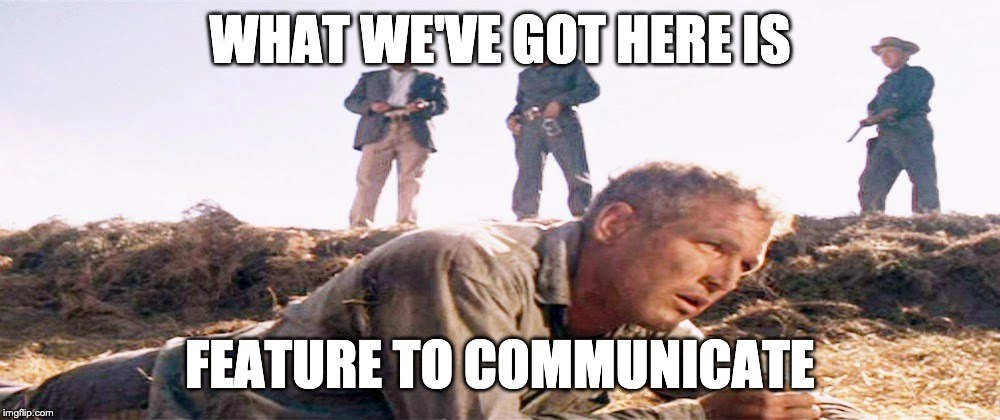
There is no concrete evidence that their current rhetoric will translate into change. Promises of “more clinicians trained,” “a new website,” or “sharing resources” are thin commitments when weighed against the scale of the crisis. Families listening to these conversations do not need another press release in audio form — they need assurance that the field is finally willing to dismantle the silos that have left so many patients without timely, effective care.
Meanwhile, the systemic problems remain glaring. Most medical schools still provide only a few hours of eating disorder training — if any at all. Physicians themselves admit they lack confidence diagnosing or treating EDs, leaving patients vulnerable to misdiagnosis and harmful delays. Early detection remains the exception rather than the norm.
When leaders now speak of “raising the bar for what trained really means,” the statement lands as an indictment of their own failure to make such training a priority long ago.
The access gap is equally damning. Even when patients are identified, treatment is often out of reach due to cost, lack of specialized providers, or long waiting lists. The promise of “connecting people to care” is meaningless without structural solutions to these barriers. Instead of confronting these realities, the podcasts retreat to abstractions about “shared truths” and “moving mountains” — lofty words detached from the urgency families are facing right now.
What Real Collaboration Would Look Like
Real collaboration does not begin with polished talking points or podcasts lacking in substance.
It begins with humility. It begins with listening — not only to one another as institutions but to the families, survivors, and frontline providers who have long recognized the cost of division. It means relinquishing the obsession with brand dominance and professional gatekeeping in favor of shared goals that truly prioritize patients over power and profit.
True collaboration would look like joint initiatives with transparent governance, shared funding streams that prevent duplication, and open access to resources across organizational boundaries. It would mean building structures that ensure accountability — not merely mouthing the word. And it would require leaders to acknowledge their role in perpetuating division before claiming the mantle of unity.
Until that happens, these podcasts serve less as roadmaps for progress than as monuments to irony: the fox guarding the henhouse, the arsonist auditioning as a firefighter, the vampire running the blood bank.

The eating disorder field — and the people it is meant to serve — deserve better than revisionist performances of collaboration.
We deserve the real thing.
 A DAD'S JOURNEY WITH EATING DISORDERS