The Academy for Eating Disorders (“AED”) announced its annual international conference (“ICED”) will be held in San Antonio, Texas from May 28, 2025, through May 30, 2025.
I will quote the most naïve, divisive, lunatic language:
“While Board members were excited at the opportunity, there was much concern for the comfort and safety of our attendees considering the political climate in the state of Texas.”
“We understand and respect that some of you will make the decision not to attend ICED 2025 due to its location. We hope that you will continue to support AED, and perhaps consider a donation to one of the many grass roots organizations in San Antonio fighting for equality. Thank you.”
Good Lord.
Comfort and safety of our attendees? Really?
Not attending because of its location? Really?
I guess the master plan of the ultra-right wing conservative people was leaked! This plan consists of as soon as anyone on the left of the political spectrum retrieves their luggage at the San Antonio airport, the “tree hugging, Birkenstock wearing, granola eating person” alarm will immediately and loudly sound out. Five white men in white dress shirts and jeans, will approach you, surround you and escort you to a nearby Ford 650 XL pickup truck.
From there you will be driven to Billy Bob’s Church for the Reclamation of Lost Souls. Upon being escorted into the 25,000-seat sanctuary, you and your fellow “libruls” will be restrained in your seats. Then, “Clockwork Orange” style, you will be forced to watch endless hours of Bible studies, religious movies and other right-wing propaganda until you are completely brainwashed.
You will then gladly become members of the church, enter into an agreement wherein you agree to tithe 20% of your gross revenue in perpetuity. Only after all of this, you will then be escorted to the hotel.
“Comfort and safety of our attendees …”
I cannot begin to fathom the insipid mania nor the superficiality of the intellect and the lack of soulfulness of people who are so entrapped by their political views that they are willing to compromise their education and understanding of eating disorders. That their radical leftist tribe means more to them than the people and families who are suffering from eating disorders. Isn’t that the ultimate act of betrayal?
For that matter, for many of those AED research professionals, how many have even been exposed to that type of suffering? Or do they merely sit in their faux ivory towers, applying for grants that very few receive? They publish a paper every three years … a paper widely read by an audience of maybe nine (9) people before it disappears into that vast gap wasteland. And they cling with quiet, and yet overwhelming desperation to the hope that “they matter” knowing all the while that they must toe the radical, “librul” company line or risk being ostracized and cancelled.
Well, here is an idea. For even one week every year, get out of your Styrofoam tower, contact a reputable clinician and then shadow them. Look into the eyes of families, of people who are suffering from eating disorders. Look at their pain. Look at their anguish. Look at their fear. And yet, we know they won’t do that.
That is because they are driven by their own fear. They do not grasp that fear is illogical and unreasonable. It is a function of our own ego. The only place that fear can exist is in our thoughts of an unknown future. It is a product of our imagination. It requires us to consider things, events that do not currently exist and may not ever exist. Fear is a choice. And yet, fear defines them.
“Comfort and safety of our attendees …” Good Lord.
Fear has become their master. And in becoming their master, failure becomes an inevitability. Fear prevents them from growing. Fear shackles them in chains of cruelty and oppression and prevents them from embracing a brighter future.
With whatever integrity, if any, they have left, AED as an organization should just announce that henceforth, their members will only conduct research applicable to the librul mindset. That they will only support clinical treatment aimed toward the librul mindset. That they will only hold their future conferences in librul cities like Berkeley, Seattle, Boston, or San Francisco. Where all members can be safe and comfortable among their fellow tribespersons. And they need not interact with anyone who remotely disagrees with them. They can remain safe and comfortable. Because that is working out so well for them.
After all, who cares that on its last Form 990, filed for 2022, AED showed revenue of $584,436 and expenses of $858,402 for a net income loss of -$273,966.00? Who cares that AED paid a management company, Virtual Inc. $382,358.00? That this management fee constitutes 65.4% of its gross revenue?
In 2021, AED showed a loss of -$118,334.00.
In 2020, AED showed a loss of -$200,058.00.
But there’s nothing to see here. Move along. Move along. AED must keep pursuing their librul agenda at all costs even to the extent of suggesting that instead of making donations to worthy eating disorder causes and organizations, its more offended members should donate to organizations in San Antonio fighting for equality.
After all, it’s not like eating disorders is serious or has the second highest mortality rate amongst all mental illnesses.
“Silence becomes cowardice when occasion demands speaking out the whole truth and acting accordingly.”
– Mahatma Gandhi
iaedp board certification apparently has undergone a significant change. When one looks at the application for certification, some very interesting things appear. Or in this case… do not appear.
In April of 2022, the iaedp certification checklist looked like this:
The requirements of association membership and symposium attendance were clearly and unambiguously set forth. [highlighting added]
Now when you go to the iaedp certification application checklist page, which is dated July 2024, it looks like this:
And so, what are the major differences? What significant requirements have been changed?
For some unknown reason iaedp has remained silent on these changes. But, we can surmise that to become board certified in eating disorders, a person no longer needs to maintain iaedp association membership. In addition, a person no longer needs to attend iaedp’s symposium once every four years.
No requirement of association membership.
No requirement of symposium attendance.
To accomplish this feat it only required numerous correspondence to Bonnie Harken, Ms. Harken’s attorneys, iaedp, iaedp’s attorneys, the iaedp corporate chapters, a class action lawsuit still in its infancy, investigations being conducted by the California Franchise Tax Board, the IRS and the Secretary of State and Attorney General of the State of Illinois, and evidence of possible tax fraud and forgery on Annual Reports filed with that Secretary of State.
Regarding the California Franchise Tax Board, one is justified in wondering whether the iaedp board of directors disclosed this information to its members or corporate chapters. After all, this is a significant issue about which iaedp members have a right to know. And if iaedp did not disclose, why not?
Regarding the possible forgery on annual reports submitted to the Illinois Secretary of State, one is justified in wondering whether the iaedp board of directors disclosed to its members and corporate chaptrers the fact that Dr. Jahraus, in a sworn affidavit submitted to the court stated that not only did he not sign those annual reports, he was not even aware of their existence. Again, this is a significant issue which iaedp members have a right to know. And if they did not disclose, why not?
Iaedp’s board of directors’ lack of candor and silence on significant issues impacting the viability of the organization itself is alarming. Especially since the issues, uncertainties and strife in which iaedp finds itself could have been handled so differently.
On August 29, 2023, as part of a correspondence I sent to Ms. Harken, the following language was included:
“Now, in the past when confronted with iaedp’s many issues and circumstances, I would ordinarily start publishing scathing articles. In this case, I would also contact iaedp’s CPA, the Attorney General of Illinois, the Attorney General of California and the IRS. Ethics complaints would be filed. I would have also contacted every person on iaedp’s Board of Directors advising them of these issues.
It is substantially likely that iaedp would not withstand this type of scrutiny and as an organization, it would not survive. But, out of my respect for some respected professionals in the community, I have not undertaken these actions … yet.
In fact, I have been strongly encouraged to attempt resolution quietly and confidentially with you and iaedp. I have reached out in good faith.
I welcome an open discussion with you in which we attempt to correct any misconceptions and right all wrongs. I also believe this can best be accomplished by bringing in a few third parties to work together collaboratively.
I sincerely hope that is successful. If it is not successful, I believe that litigation is inevitable perhaps even on a class basis. Again, I hope that step is not necessary.”
Notice that no monetary demands were made. A request for a transparent discussion. To come together for the good of the community. To address issues about which a number of iaedp members had complained. And a question must be asked, was iaedp’s board of directors made aware of that communication? If not, that raises some very serious concerns. If the board was advised, we must presume that iaedp’s board 100% supported Ms. Harken and her statement, “I will fight to the bitter end.”
Especially since had those meetings taken place, it is substantially likely that the certification requirements would have been rectified privately and confidentially. Iaedp would look like a forward thinking organization listening to the complaints of its members.
Instead?
The response from Ms. Harken’s attorneys was to thank me for pointing out their issues (which they said had been corrected) and then to point out that the Morgan Foundation, which I started on behalf of my daughter was also not in good standing. They said I had as much business pointing out iaedp’s flaws as they did pointing out my daughter’s foundation was closed. They hoped this concluded the matter.
Iaedp erred. In perhaps the gravest way possible.
I closed the Morgan Foundation because I foresaw that some future conduct in the eating disorder community could become adversarial and unpopular with certain groups. I did not want her associated with that strife. When iaedp through its then attorneys responded as they did, to me that was impugning my daughter and memories of her. A person with the smallest amount of compassion never states nor even implies anything which could be interpreted as impugning a child who died from anorexia.
Settlement offers were made which were met by iaedp board of director’s usual and customary silence. And so now, we stand on the brink of wondering whether iaedp can possibly survive.
What we do know is that from this point forward, the symposium attendance and association membership requirements are no longer required for certification. Just as we demanded in settlement offers and in the lawsuit.
So why now? Why change the requirements now?
If these requirements did not violate the antitrust laws, why eliminate them?
If these requirements were just and fair, why eliminate them?
If there was any rational business reason to maintain these requirements, why eliminate them?
If these requirements were financially reasonable, why eliminate them?
Aren’t we reasonable in presuming that if rational, good faith answers existed for those questions, iaedp’s board of directors by now would have issued a statement explaining why those requirements would no longer apply to new applications? Instead they wrapped themselves in their usual cloak of silence.
Why make these changes in certification using a cloak of silence instead of including them as part of a global settlement of a lawsuit which threatens iaedp’s very existence? Imagine resolving the lawsuit while making the changes in the certification program. This type of announcement to iaedp’s members could have reassured those members that iaedp was moving into the future openly and transparently. Instead? Silence.
And what about the thousands of professionals who paid sums of money in that past? What about them?
It is reasonable to assume that those iaedp certified professionals who had paid large amounts of money for association membership and costs to attend its symposiums may be disgruntled, if not angry. Understandably so. They may be wondering what recourse, if any, they may have.
As usual, iaedp certified professionals are left with the customary silence from iaedp’s board of directors. The same silence that greeted me each and every time I attempted to resolve this matter. The same silence which has come to define iaedp.
I believe federal and state agencies’ investigations are on-going. The lawsuit is on-going and is not likely to be resolved anytime soon. But one of the demands in the lawsuit involves, on a class wide basis, reimbursement for those amounts paid by iaedp certified professionals. If the class is certified, it is very likely that class members will be reimbursed for at least some of their monetary costs. If the class is not certified, only the individual plaintiffs will still have a right to seek reimbursement for their damages.
Even though iaedp is hiding behind its curtain of silence we now know that three of the more obvious goals of the lawsuit have been achieved:
Ms. Harken resigned;
Association membership was eliminated;
Symposium attendance was eliminated.
Mission accomplished with all three of these goals.
Unfortunately, as for iaedp and whether they can proceed in the future with honesty and transparency, that is, assuming iaedp survives, we are only met with…
Whether it is because media outlets are finding more click bait worthy stories or whether it is because we have finally passed a tipping point, we are finding more stories seemingly on a weekly basis on the attempted intersection between anorexia nervosa and palliative care.
The Shadows of our Demise. The Harbingers of Hopelessness.
In the Netherlands, a 29 year old is allowed to take her own life after suffering from mental health issues. Her doctors believe they are out of options and have given up hope.
A 34 year old young woman in the Netherlands is diagnosed with an eating disorder, recurrent depression, autism and mild learning difficulties. She said she tried countless therapies but struggled her entire life. And then in 2022, a counselor told her that euthanasia for psychiatric reasons was legal. She made it her goal ever since, admitting that she always thought about death.
In the UK, recently a 19 year old young lady suffering from anorexia died from eating disorders after waiting for treatment. The UK’s overburdened mental health system could not admit her for treatment.
In the United States, a very small sect of treatment providers is embracing medical aid in dying for persons suffering from anorexia. Palliative care for persons with eating disorders has entered our lexicon. This despite the fact that we have no generally accepted standard of care for treating eating disorders and limited knowledge of evolving medical interventions to treat this brain-based illness. The ignorance in the medical and mental health industries has grown so much that some treatment professionals have written, “Terminal Anorexia” (don’t get me started) is the same as Severe and Enduring Anorexia Nervosa.
I can’t help but wonder … for those medical and mental health professionals who support, if not actively engage in physician assisted suicide for those who suffer from anorexia, how many have had a beloved child die because of this insidious illness? Or is it merely an academic exercise impacting persons not of their blood line? How many have felt that anguish that cannot be adequately described and yet, still tears apart your heart and soul to a depth that cannot be fathomed unless experienced? How many of those medical or mental health professionals who have looked into the eyes of a patient suffering from eating disorders and who said, “I can do no more. There is no hope.” have had a child cruelly ripped from life?
Any? Probably not. That type of pain forever changes you.
So, for those medical and mental health practitioners who support physician assisted suicide for anorexia nervosa, let me attempt to describe for you, [as much as my limited abilities permit] the pain, the anguish so deep, so permanent, that it is almost beyond comprehension.
Think of your beloved daughter. The memories. The memories of going on Indian Princess campouts in Southern Oklahoma. And as you walk back to your tents late at night, you are holding her in your arms, she so young and precious, and then you look up and see the blackest of night skies, bright stars so numerous as to be uncountable … you see so clearly, the Hale-Bopp comet. You breathe in your daughter. You feel her so close to you. Her head on your chest, hearing your heartbeat. You see her innocent eyes closing, a blissful smile on her face.
You remember the joy on her face as that very afternoon, she caught her first fish! And she is jumping with elation.
You remember so distinctly the day she was born. And you being filled with an incredible love that captures you.
You think of those many nights helping with homework.
You think of those nights when, because you are a dad and she is a blossoming young lady, she wants nothing to do with you!
Then, you think of those many days and nights when she called you “twins.”
You think of that day when you took her to the circus. How she clapped with joy when the elephants marched in. And her howls of glee when a circus clown dragged you to the center ring and threw plates with you while thousands looked on.
You remember taking her to Del Frisco’s Steakhouse for her 10th birthday and after the waiter announced all the specials that night, she looks him in the eyes and says… “I believe I will have the lobster.” You laugh seeing the waiter’s incredulous face. And then smile watching her take each piece of lobster and delicately dip it in butter and eat it with a smile on her face.
You remember taking her to her first opera when she was 7 years old. As intermission happens, she looks at you and sweetly asks, “Daddy, will there by more music after halftime?”
But you also remember years of struggle, pain and heartache.
And then, one dark night. One dark, unholy night, eating disorders claims its next victim. As you are holding her hand, the attending doctor looks up at you and softly says, “She’s gone.”
In your numbness, shock and an anguish that cannot be measured, you realize that you will never be the same. The man, the parent, the daddy you were, is forever changed. Whoever you thought you were … is gone.
After awhile, you come to realize that you will never see the joy on her face when she tells you, “Daddy! I am engaged!” You will never walk her down the aisle. You will never have that first Daddy-Daughter dance at her wedding reception. You will never hold for the first time your grandchild from your beloved daughter.
You will never hold nor hug your daughter ever again. And you will never, ever, ever, ever hear again, your daughter’s voice saying, “Daddy, I love you.”
It is exactly that. That is what physician assisted suicide for anorexia rips away. That is the dagger to the heart. That precious life. Those precious words. Gone forever.
A day upon which we remember, and hopefully honor our fathers. To acknowledge their lives and their contributions to our lives. To thank them for the indelible bond they formed with us when we were children.
Fathers are our first role model. And by that, it could mean a very good, productive, strong role model. Or possibly … not.
Many times, our path in life is initially shaped by our fathers. This could include our chosen profession. Our outlook on love, happiness and life. Ideally, we learn how to treat and honor our future partners by observing how our father interacted and engaged with our mother.
Many times, our views on education, on work ethic, on morality, on our leisure activities are shaped by our fathers. They support us when we are down. They share in our victories and our sorrows. Being the disciplinarian when needed. And perhaps, teaching us that life is hard. That we will fail early and often. But failing is not the important thing. So long as we embrace the need to pick ourselves up after each fall, learn from it, and use that to become wiser and bolder.
Collaboration and shared parenting with our mothers cannot be understated in terms of importance. From each, we learn something different. Something important. And without that shared perspective on life, so too our own views on life can be rendered incomplete, or biased, or less enlightened and evolved.
In fact, the evidence is overwhelming … children are more likely to thrive— behaviorally and academically, and ultimately in the labor market and adult life—if they grow up with the advantages of a two-parent home. Numerous academic studies confirm that children raised in married parent homes are less likely to get in trouble in school or with the law; they are more likely to graduate high school and college; they are more likely to have higher income and be married themselves as adults. Research suggests that boys are especially disadvantaged by the absence of dads from their homes. These facts are indisputable.
And doesn’t that pertain to everything in life? A balance in friends, in work colleagues, in associates? Differing, yet intelligent views being debated respectfully. Being open to the endless possibilities in life that are before us. Without that diversity of thought, that diversity of wisdom, the views and perspectives that our dads brought to us, views very different than that brought by our mothers, we are incomplete. We are more likely to settle back into the comfort of those who think exactly like us, act like we do, have the same viewpoints and outlook on all issues. We become tribal.
It is inevitable that one of two manifestations occur in a tribe. One, we become complacent and lazy in our thinking and exploration. We only look for circumstances which support our tribe’s beliefs. After all, we are safe within our tribe. We do not need to expand our horizons. The group mentality predominates. We are correct on all issues within our tribe.
The second manifestation is we become warlike. Because we are right, because we believe we are just, because we believe our tribe is all powerful, because we believe our views are the absolute best for society, we must impose our views on society as a whole. After all, it is for the common good. Our tribe knows best. And society WILL comply with our views.
This is particularly true in the eating disorder community and its tribe. Now make no mistake, these are two very different groups of people.
The eating disorder community consists of those families, husbands, wives, dads, moms, sons, daughters, brothers, sisters … people who are struggling with eating disorders. Those who are doing the suffering, the living and the dying.
But what constitutes the eating disorder community tribe? This tribe largely consists of women who tend to be politically and socially very far left; extremist in their disregard of medical sciences and related objective standards and criteria; wishing to enforce their view of centering persons based on the color of their skin or the larger product of mass and gravitational force applied instead of prioritizing those who are the most gravely ill; spewing forth their ideological blather regardless of accuracy and integrity knowing that the likelihood of adverse repercussions for their misconduct and irrational belief system is inconsequential.
As for dads and this eating disorder community tribe, observation and experience teach us that for the most part, dads are verboten … not welcome. Routinely dads are ostracized, forsaken, ignored, pushed aside, back stabbed. Unless of course that dad kowtows to the tribe’s uncompromising extremist views and meekly complies with the tribe’s dictates.
I could, once again, set forth the overwhelming facts and statistics supporting this opinion, as I did in this past article:
But what would be the point? Again, those are simply statistics, facts, reason and logic. But the eating disorder tribe does not base its mania upon facts, reason and logic. Its mania embraces over the top emotionalism and self-loathing. Instead of debating and discussing complex biological, genetic and societal structures and proposing workable solutions, the tribe simply slaps a label on an issue, lifts high their pitchforks and burning torches and declares victory.
And the eating disorder community is worse off for that.
In the second part of this missive, we will look at the ramifications on eating disorders which have resulted from the attitudes and misconduct of the eating disorder community tribe. It is likely to not be pretty especially since we will look at facts, logic and reason.
But never forget, we dads persevere. We have resolve and resiliency. Yes, at times and ok, more often than not, we need direction. But we undertake tasks with passion, strength and determination.
Up until now, the eating disorder community tribe has acted with impunity, without interference or push back from dads. No longer.
Especially when those words have been universally disavowed and do not accurately reflect a medical nor mental health condition. Nevertheless, they are thrown out by uneducated medical professionals in a cavalier, irresponsible and harmful manner.
In May 2024, an abstract was published in the Journal of Pain and Symptom Management, entitled, “Consider Concurrent Hospice Care for Patients with Terminal Anorexia.” Its authors were Ingrid Berg, DO, Kevin W. Craig, MD and other initials, and Lea C. Brandt PhD and other initials.
Websites list Dr. Berg’s areas of expertise as chronic diabetes, sepsis, tobacco use, chronic heart failure, insomnia, pneumonia and respiratory infections, stroke, gastrointestinal bleeding, irregular heartbeat, inpatient urinary tract infection, kidney failure and chronic cutaneous skin ulcer. They missed the “kitchen sink.” In addition, there are no references to any expertise in treating eating disorders.
Dr. Craig is at the University of Missouri School of Medicine and lists his expertise as Alzheimer’s disease, geriatrics and hospice care. On the University of Missouri website, Dr. Craig only lists 5 publications. None involve eating disorders and Dr. Craig does not list eating disorders as any type of specialty.
Lea Brandt, PhD is also at the University of Missouri School of Medicine and lists her expertise as clinical ethics. I found 22 publications authored by Lea Brandt, PhD. NONE involved eating disorders. The only reference to eating disorders and Lea Brandt, PhD is related to the above abstract. Clinical ethics? Thy name is not Lea Brandt on this topic.
With this information, we can safely discern that these “Three Harbingers of Death” have no substantial experience with eating disorders, do not write about eating disorders, do not treat people with eating disorders, have no lived experience with eating disorders, do not understand how eating disorders impact the brain and biological system and have no expertise with eating disorders.
When one looks at the topic which apparently was presented at the American Academy of Hospice and Palliative Medicine (AAHPM) and the Hospice & Palliative Nurses Association (HPNA) Annual Assembly, combined with media reports of the paper, we can readily see the false statements, the naïve and outright misunderstandings of eating disorders, the dangerous course of conduct supported by these doctors and the dark mindset which infests their souls, assuming they even have one. Their lack of understanding and knowledge on this topic is so egregious and harmful that certainly the State Boards of Medicine in Missouri and Nebraska will be contacted to determine if disciplinary consequences are appropriate for such egregious misconduct.
With this background, let’s address just some of the more open and obvious deficiencies in their thinking and presentations.
First, they believe and represent that, “Severe and Enduring Anorexia Nervosa” (”SE-AN”) is the same as and is also referred to as “Terminal Anorexia.” The ignorance and falsity in that statement alone cannot be understated. Good Lord!
While there is no formal consensus on a definition of SE-AN, Hay and Touyz (2018) proposed the following criteria:
(a) clinically significant functional impact;
(b) at least a 3-year duration of illness; and
(c) exposure to at least two evidence-based treatments (Hay & Touyz, 2018).
While SE-AN is clearly a debilitating illness and some do not recover or may die due to complications of AN, studies indicate that most individuals with a protracted illness course do recover (Eddy et al., 2017).
Ergo … there is no “terminal” aspect to it at all.
Contrarily, “Terminal Anorexia” was an ill-advised term proposed by Dr. Jennifer Gaudiani in February 2022. Since that time, an avalanche of papers have been published criticizing Dr. Gaudiani’s paper while also showing that the term, “Terminal Anorexia” is a non-sequiter. Its criteria was fundamentally flawed. In fact, Dr. Gaudiani has repeatedly and publicly called for the term to stop being utilized, that additional study needed to be done and she apologized for any harm which may have been caused.
In short, the unrecognized, debunked theory of “Terminal Anorexia” cannot in any way be compared to Severe and Enduring Anorexia Nervosa except for perhaps in one way … One is a direct path to immediate and certain death. The other is an enlightened, hope and faith based journey which leads to life.
Nonetheless, these three “Specters of Death” insisted on inaccurately utilizing this term with no frame of reference and even though the term has been denounced by every ethical eating disorder research professional and clinician. And yet, there are other great concerns in their presentation.
Brandt (the so-called ethics expert) is quoted as saying, “Going into ethical considerations and debate, the diagnosis of terminal anorexia is relevant,” Brandt said. “And in that there is this intersection between law and ethics that really influences medical decision making. We do have to take into account this legal framework [for] how we make decisions within the health care system. The standard of care [is] a variable, but relevant construct when determining what is ethically indicated.
The first question is how does one diagnose a medical condition that does not exist? A medical condition which has not been studied, accepted nor proposed by ANY medical or mental health organization, group, or persons (except by the initial authors who have since backed away from this term)? The non-existent condition and phrase “Terminal Anorexia” cannot be diagnosed because it is not real. It has not been proposed let alone adopted by the American Medical Association, the American Psychiatric association nor any international medical or mental health association. It is a figment of the imagination, a flight of fantasy. It is Harvey the Rabbit. Not one reputable, eating disorder expert will vouch for its authenticity.
And yet, Brandt also wishes to talk about (1). the legal framework; (2). what constitutes a standard of care and, (3). terminal anorexia? Fine.
Going in reverse order, of those three issues, two do not even exist. First, Terminal Anorexia is in the grave. It was at best, a woeful term of art with no generally accepted criteria supporting it. It is now only being perpetuated by ill-advised, ignorant mental health or medical professionals (like these three) who don’t care how many people are hurt by its application. Second, there are no generally accepted standards of care for the treatment of eating disorders. There is no dispute about that. And so, that only leaves the legal framework, the sandbox in which I play. An area in which these three are about to become personally familiar … and not in a good way.
Brandt then digs her terminal grave deeper by stating, “Determining whether terminal anorexia is an acute condition versus a chronic, life-limiting illness resulting in death “becomes extremely difficult,” she said.
First, once again, terminal anorexia is a made up term with no independent medical or mental health studies supporting it and which has been lambasted by every reputable eating disorder expert. Secondly, every reputable eating disorder research professional, medical doctor and clinician classifies SE-AN as chronic.
Brandt continues with her own grave digging by stating, “Additionally, the variances around terminal anorexia nervosa criteria can make it difficult to determine what is medically appropriate, as well as ways to provide goal concordant care.” Brandt, … there you go again. THERE IS NO TERMINAL ANOREXIA NERVOSA CRITERIA. And even if there were criteria, your very words decry this criteria when you state there are variances around the criteria.
Perhaps the greatest concern arising from the abstract, media release and presentation is, “A case report from a Midwestern academic medical center about a 20-year-old woman with SE-AN provides an example of end-of-life care for this vulnerable population that is not guideline-focused, but patient-centered. When she enrolled in hospice, the hospice organization offered to cover ongoing treatment while simultaneously providing supportive care services to her and her family.”
TWENTY (20) YEARS OLD? TWENTY (20) YEARS OLD!!! We know that the frontal lobe hasn’t even finished developing until a person reaches 25 years old. Then there is the obvious arrested development so common with addictions and eating disorders. So, who recommended hospice for a 20 year old with anorexia? What reputable medical center would accept that? And, were these three involved in any way with that decision?
These Three Riders of the Apocalypse with no appreciable eating disorder experience take a term that has been completely debunked and try to fit it into their “Escorting You to Death’s Door No Matter What” practice and obvious mindset. They are the very definition of an inexperienced population which has completely misconstrued eating disorders and they latch on to their own ignorant belief that SE-AN is terminal. They obviously do not know that terminality usually means some biological process is irreversible and with relative certainty not going to respond to any available treatments.
Some people have postulated that once the phrase, “Terminal Anorexia” was placed in the public, Pandora’s Box has been opened, the genie is out, and it is never going away. Perhaps.
But I don’t think so. Instead, I believe there must be harsh ramifications and consequences for its perpetuation by ignorant medical professionals. We can rightly deduce that this 20-year-old person with SE-AN whom was escorted to death’s door took place in the medical center where two of them practice.
And so, once more unto the breach dear friends, once more. More research will be undertaken. And then, ethics complaints to the Missouri and Nebraska Boards of Medicine. Ethics complaints to the university medical centers where these people practice. Ethics complaints to every organization in which they belong. Social media blitzes. The irony of filing an ethics complaint against a person who specializes in clinical ethics is delicious.
And yet, these three were given the opportunity to discuss this matter with some of the foremost experts in the eating disorder community. An opportunity for enlightenment and wisdom. An opportunity to study further these complex issues. To date, they have not taken advantage of that offer and opportunity.
For those medical and mental health professionals who insist on using that term and in doing so, hurt a very vulnerable population, their patients, you will be called to account for your ignorance and your negligence. Research and ethics complaints await and are being processed.
The tragic reality regarding eating disorders is that every objective, fact-based study and research paper indicates the number of persons afflicted with eating disorders, the severity of those eating disorders, and the mortality rate for persons afflicted with eating disorders are at the highest level we have ever known. In short, more people are suffering and more people are dying. And yet, no accountability is being taken. No consequences are being enforced. Honest answers to difficult and pointed questions are avoided or are non-existent.
There are undoubtedly many causes for that grim reality. Unfortunately, part of that reality must be laid at the feet of the eating disorder therapist mind set — group think currently infesting and harming the community.
In general, when many therapists are asked about the cause of the alarming reality, they point fingers at Covid, and “diet culture,” and fat phobia and white supremacy and weight discrimination and the patriarchy and ableism and healthism and every “ism” know to humankind.
However, where do most therapists refuse to point any fingers? What will not be investigated? The answer quite simply is … themselves. There is no push back let alone accountability. Conflicts of interest ignored. Patients also being utilized as employees. Narcissism. In the name of social justice, reduced priority given to those who suffer and their families. And that is the “most unkindest cut of all.”
Make no mistake … there are some incredibly erudite, insightful, wise, compassionate and inspirational therapists. They are more than deserving of our gratitude, admiration and respect. But they are far too few and far too unknown. And that leads to tribal mentality and questionable mind sets and programs.
For example, a new proposed, certification program for eating disorders, not even in its infancy and not accredited by anyone, starts to roll out its program not by discussing eating disorders, nor their serious nature, nor the many complex factors and issues involved nor the incomprehensibly horrific mortality rate. No. This program starts out by addressing “Indigenous Peoples’ Land Use Acknowledgement” and how you can reach out to groups supporting that “very important aspect of eating disorders.”
Because nothing says “this certification program is a very serious, hard-hitting, science based, evidence rich program designed to effectively address eating disorders in the 21st Century” than leading right out of the gate addressing Indigenous Peoples’ Land Use Acknowledgement! And the people who thought that would be an incredibly good idea are … therapists?
My initial response was going to expose the absurd nature of that messaging and its irrelevancy to eating disorders. In a very direct and blunt manner. But then sometimes, a different message comes to us in the most unexpected way. And in being open to that messaging and the wonders of the multiverse, we perhaps start to see and realize alternate ways of thinking, feeling and believing.
For there can be beauty in the broken.
Kintsugi is a Japanese art form that repairs broken pottery with gold, rendering a new piece more exquisite than it was before the break. It literally means “to join with gold.”
Katherine and Jay Wolf, in their book, Suffer Strong, state:
“The story of kintsugi—this style of pottery—may be the most perfect embodiment of all our trauma-shattered lives… Instead of throwing away the broken beloved pottery, we’ll fix it in a way that doesn’t pretend it hasn’t been broken but honors the breaking—and more so, the surviving—by highlighting those repaired seams with gold lacquer. Now the object is functional once again and dignified, not discarded. It’s stronger and even more valuable because of its reinforced, golden scars.”
An article written by Vaneetha Risner beautifully states, “Rather than trying to hide the damage, kintsugi highlights the repair. The imperfections are what make it beautiful and valuable. A broken piece that is put back together has more of a story, seems more authentic and real, is stronger and more resilient than something that has stayed pristine.”
“God is the restorer, the kintsugi Master who skillfully and tenderly puts the broken pieces of our lives back together.”
Kintsugi. Kintsugi.
And so, regarding that attempted new, broken certification program, roll it back, revise it, edit it. Consult with intelligent people who disagree with you. Collaborate with professionals from throughout the community not just those in your tribe. There is gold for you to use in addressing the flaws in the program. Find the gold and utilize it. Mold it and make something better. And most importantly, always remember… IT IS NOT ABOUT YOU!
Therapists … You are merely the messengers. It is about the families who are suffering from eating disorders. And when your child is suffering, you simply want them to heal, to embrace the richness of life.
Now, I don’t like to think of our suffering children as being “broken.” Perhaps, bent a bit. Fractured perhaps. But from those hardships, those obstacles, from deprivation, from fear and hurt and anger can come … healing. Enlightenment. Beauty. Resiliency and strength. Kintsugi.
Our therapists, those whom we entrust to help save the lives of our children, must embrace the concept of kintsugi. You must be wiser, more insightful, get past your preconceptions, your own fears, your own inner turmoil. Instead of believing you have all the answers, know that you absolutely do not. But you can get closer to a place of healing by opening your hearts, your minds, your souls to the wisdom of others.
Take the broken. And make it more beautiful than it ever was before.
As many know, iaedp is facing a crisis which could result in its demise. Not just in the litigation arena, but through the administrative complaints brought before the IRS, Department of Labor and the California Franchise Tax Board.
As such, I may give occasional updates. Keep in mind these updates will be coming through the lens of a person who is in an adversarial relationship with iaedp and who has a vested interest. And yet, I will attempt to bring objectivity to this matter since the eating disorder community as a whole, has an interest in the outcome.
The Petition
First, as you may recall, a petition demanding the resignation of Bonnie Harken was started by third parties. That petition now has 345 signatures.
Ms. Harken’s “retirement”
You may also be aware that Ms. Harken’s “retirement” was announced at the Iaedp Symposium. Almost one month later, iaedp finally made a public announcement. Whether Ms. Harken actually “retired” is subject to speculation since Ms. Harken’s position about the lawsuit was that she “would fight until the bitter end.” It is interesting that Ms. Harken never mentioned what was in the best interest of iaedp.
Well, the bitter end has arrived for Ms. Harken.
Even still, at least until May 6, 2024, Ms. Harken was still acting in the role of managing director.
The Lawsuit
On behalf of a class representative and potential class, I filed a lawsuit in federal court in Dallas, Texas. Iaedp, Dena Cabrera, Dr. Joel Jahraus and Dr. Ralph Carson are represented by a law firm based in Chicago. Ms. Harken is represented by a different law firm. All attorneys are from reputable firms and have strong reputations.
The case is still in its infancy and none of the substantive merits have been addressed since iaedp and Ms. Harken are attempting to have the case moved to the Central District of Illinois, a district in which Ms. Harken resides. The Court has not yet ruled on this motion.
However, there are significant issues which have been revealed in various affidavits filed by the defendants.
Chapters
Since Ms. Harken incorporated iaedp corporate chapters in Illinois, those chapters are required to annually file a report with the Illinois Secretary of State. That report sets forth the officers of the corporate chapter as well as identifying the people on their Board of Directors. By way of example, I am including the Report for the DFW Chapter.
As you can see, the Report was signed by Dr. Jahraus under “the penalties of perjury and as an officer,” as “President.” However, the President of the DFW Chapter, as listed on the Report, is Steffanie Grossman.
The Report also identifies the Board Members of the DFW Chapter, (who are also listed as Officers) as follows:
Director: Joel Jarhus [sic.], P. O. Box 1295, Pekin, Illinois 6155
Director: Dena Cabrera, P. O. Box 1295, Pekin, Illinois 6155
Director: Ralph Carson, P. O. Box 1295, Pekin, Illinois 6155
This post office box is owned and controlled by Defendant Harken.
This Report raises a number of concerns … why is the then President and now Past-President and current Board Member of iaedp, an entity which according to Dr. Jahraus, is a completely separate business entity with separate officers, signing under the penalties of perjury, a legal document filed with the Illinois Secretary of State pertaining to the DFW Chapter and listing himself as “President” on behalf of the DFW Chapter?
Especially since in an Affidavit filed in the case, all the individual defendants (except for Ms. Harken) stated under oath the following:
“2. I am also currently a member of the Board of Directors of the International Association of Eating Disorder Professionals Foundation, Inc. (“iaedp”).”
“11. The iaedp and local chapters, including the Dallas/FW Local Chapter, have separate officers and directors and separate set of bylaws.”
“12. No officer, director, or board member of iaedp is an officer, director, or board member of the Dallas/FW Local Chapter.”
As you can see, the Report, filed under penalty of perjury directly contradicts Ms. Cabrera’s, Dr. Carson’s and Dr. Jahraus’ statements to the Court. (which were also filed under penalty of perjury).
I brought this to the Court’s attention.
In response, Dr. Jahraus, filed a supplemental affidavit, and in this document, he stated:
“7. Specifically, each of the Annual Reports for the local chapters lists me as a director of numerous local chapters located throughout the United States. My name is also printed on the signature line on each of those forms listing me as “president” of each of these organization. None of this information is correct. I am not a director of any local chapter, nor am I the president of any local chapter. I also did not authorize or know that my name had been printed on the signature line of any of these forms.” [emphasis added]
“8. I did not participate in the preparation of any of the local chapters’ Annual Reports. I did not know until very recently that I was incorrectly listed as an officer or director in any of those Annual Reports or that my name had been placed on the signature line on those Annual Reports.” [emphasis added]
Ms. Cabrera and Dr. Carson made similar affirmations.
Despite their supplemental statements, legally Ms. Cabrera, Dr. Jahraus and Dr. Carson are on the boards of directors for the corporate chapters. And will remain so until they resign or are replaced.
Except for Ms. Harken, each of the corporate chapter Directors is saying that they were incorrectly listed as a director and until recently did not even know they were listed.
This begs the question … if Ms. Harken was also not aware of the forgery and being listed as a director without her knowledge or consent … why didn’t she also file an affidavit stating this?
Who was responsible for submitting these false Annual Reports to the Illinois Secretary of State? Who falsely signed the Reports on behalf of Dr. Jahraus? Who did not even tell those persons they were on the Board of Directors? (if you believe the Directors) Who committed forgery?
Under Illinois criminal law, forgery is defined in relevant part:
Sec. 17-3. Forgery
(a) A person commits forgery when, with intent to defraud, he or she knowingly:
(5) unlawfully creates an electronic signature of another person, as that term is defined in the Uniform Electronic Transactions Act.
Who indeed?
Maybe the same person who failed to inform those Board Members that they were even on the Board of Directors? (if you believe the Directors) Maybe the same person who controls the Post Office Box listed as the address for those directors. Maybe the same person who has ruled iaedp with an iron fist for over two decades? Maybe the person who has financially benefitted the most from iaedp? Or is it one or more of that person’s minions, perhaps former staff members?
Further, if those directors truly did not know they were on the Boards of Directors for the corporate chapters and their names were listed without their knowledge, and if this is in part, why they are in the lawsuit … why haven’t they filed cross claims against the person(s) who forged their name or improperly listed them as directors?
From the lawsuit, we also learned that Ms. Harken misclassified herself as an “independent contractor.” This was done in an obvious attempt to avoid paying taxes not just to the State of California but the IRS. In California, where iaedp is based, California law defines independent contractor as:
Cal. Labor Code § 3353
Section 3353 – Independent contractor defined.
“Independent contractor” means any person who renders service for a specified recompense for a specified result, under the control of his principal as to the result of his work only and not as to the means by which such result is accomplished.
Ms. Harken had no principal. Further, in an affidavit she submitted to the Court, Ms. Harken testified to the following:
I am Managing Director of the International Association of Eating Disorder Professionals Foundation, Inc. (“iaedp”);
I have been Managing Director since 2002, and am very actively involved in the iaedp, particularly with respect to its annual symposium;
Throughout my tenure at the iaedp, my duties and responsibilities have included among other things, to lead the organization according to decisions made and strategies developed with the board of directors, as well as protect and grow the organization’s financial health, plan for upcoming initiatives and leadership of the initiatives within the organization, mentor new leadership, and create polices that ensure new strategies align with the organization’s mission are put into action;
I primarily conduct business as Managing Director and operate the iaedp from my home in Pekin, Illinois;
All physical records related to the governance and management of the iaedp are stored at 1103 S. 5th Street, Pekin, Illinois 61554-4525;
All electronic records related to the governance and management of iaedp are stored in various storage platforms determined by purpose and access;
The principal place of business and headquarters of iaedp is Pekin, IL;
All physical records related to the governance and management of the iaedp are stored at 1103 S. 5th Street, Pekin, IL 61554-4525.
Ms. Harken was also on the Board of Directors of Defendant iaedp and was/is Chairman of the Board of Directors of all “independent” corporate chapters. Ms. Harken maintains the books and records of iaedp from her home. And yet, despite controlling all aspects of iaedp, Ms. Harken boldly misclassifies herself as an “independent contractor.”
The evidence is overwhelming. Ms. Harken and iaedp are alter egos. That is in part why complaints were filed with the Department of Labor, the IRS and the California Franchise Tax Board. And with the sworn statements from Dr. Carson, Dr. Jahraus and Ms. Cabrera, a complaint will be filed with the Illinois Attorney General.
Ms. Harken’s Interim Successor
Iaedp has appointed Dawn Gannon as an Interim Executive Director. I have had the pleasure of knowing Ms. Gannon for a number of years. She admirably served as second in command to Elissa Myers at AED. I know her to be an intelligent, ethical person. I am sure if anyone reached out to her with any questions they may have, Ms. Gannon would give them all the time they required.
I like Dawn. I believe she will do a good job. But the task is overwhelming.
iaedp’s problems are deep. The problems which exist are the type that destroy organizations and businesses. I sincerely hope that Dawn will be able to soldier through, discover where the many errors have been made and right the ship.
Unfortunately, I believe that ship has already sailed. The damage was done long before I became involved. Whether the case is tried in Peoria, Illinois, Dallas, Texas, or somewhere else, I believe the result will be the same. With the administrative complaints being filed and now with the evidence submitted to the Court by all defendants, the information is more than enough to allow administrative agencies to act.
I sincerely hope I am wrong on this issue. That would mean Ms. Gannon performed miraculous work and iaedp comes out of this crisis much stronger, more reputable, more responsive and perhaps even an organization the community can take great pride in. Nonetheless, the mistakes and egregious conduct of the past demand consequences. For the many professionals who were subjected to needless expense, accountability must be demanded. For families suffering from eating disorders, demand for the absolute best must remain paramount and of the highest priority.
An internationally known advocate in the eating disorder community in Australia sent me information about a webinar which takes place on June 12, 2024. It is entitled, “ “Holding Hope—Exploring Compassionate & Holistic Care Pathways for Longstanding Eating Disorders”.” It is being presented by the National Eating Disorders Collaboration in conjunction with Australia’s Commonwealth Department of Health & Aged Care.
The program is ostensibly about: “This discussion paper explores the multifaceted challenges and ethical complexities of palliative care for people experiencing longstanding eating disorders. It summarises and synthesises lived experience, research and clinical expertise to advocate for the development of palliative care guidelines for longstanding eating disorders.”
“Holding Hope addresses the complex landscape of longstanding eating disorders within the context of palliative care, emphasising compassionate care pathways (as distinct from end-of-life considerations or voluntary assisted dying). While recognising the ongoing discourse surrounding clinical characterisation of eating disorder stage and prognosis, this paper places its emphasis on advocating for compassionate care, primarily through palliative approaches, irrespective of prognosis.” [emphasis added]
The first most obvious and puzzling inconsistency was that the title of the webinar contradicted its explanatory purpose. The title specifically uses the phrase, “Longstanding Eating Disorders.” But then, the explanation uses the phrase, “irrespective of prognosis.”
I understand that “Longstanding Eating Disorders” is simply another derivation for “Severe and Enduring” the phrase more commonly used here in the Republic. Severe and Enduring is certainly a prognosis. And so, this conundrum required further contemplation.
Irrespective of prognosis? To make sure I read and understood the highlighted portion of the above paragraph correctly, I researched the definition for both “irrespective” and “prognosis.”
The most common definition of irrespective was: “without considering; not needing to allow for.”
The most common definition of prognosis was: “the prospect of recovery as anticipated from the usual course of disease or peculiarities of the case.”
So, the webinar is emphasizing compassionate care, through the lens of palliative care without considering the severity and endurance of the eating disorder? Or how advanced the eating disorder is? Or the unique needs of an individual patient? And doesn’t that directly contradict the title of what this webinar is supposed to be about?
Holding Hope(lessness) then states, “It is important to dispel the common misconception that palliative care is synonymous with end-of-life care. Rather, it embodies a comprehensive approach designed to enhance overall well-being and quality of life for individuals navigating the complex interface of physical and mental health challenges due to the impacts of longstanding eating disorders.”
So, me, not being the sharpest knife in the drawer, researched the definition of “palliative care.” The most common definition and/or description was along the lines of: “Palliative care is specialized medical care for people living with a serious illness, such as cancer or heart failure. Patients in palliative care may receive medical care for their symptoms, or palliative care, along with treatment intended to cure their serious illness. Palliative care is meant to enhance a person’s current care by focusing on quality of life for them and their family.”
But, there is another part to the definition. That part of the definition includes, “Palliative care refers to relieving the symptoms of an incurable medical condition.” [emphasis added]
An incurable medical condition. Have eating disorders ever been characterized as an “incurable medical condition?” For that matter, have eating disorders ever been characterized primarily as a medical condition period?
And yet, our friends at “Holding Hopelessness” seemingly want to:
Disregard that eating disorders are not currently classified as primarily a medical condition;
Disregard the question of whether eating disorders can be an incurable medical condition,
Disregard all medically and scientifically based knowledge on the topic and;
Disregard any and all prognosis altogether.
Or perhaps “Holding Hopelessness” want to frame the issues to coincide with their limited narrative and the belief system of a few persons.
Then again, perhaps I am the loon looking at “Holding Hopelessness” through the lens of clown show binoculars. Then, I found a 2004 report entitled, Survival After Enrollment in an Australian Palliative Care Program. That report can be found here:
This Report included the following information and statistics:
“We analyzed the survival of 1138 patients enrolled over a 30-month period.”
“The mean age was 70.1 years and 55% of the patients were male.”
“The most common cancers were lung (19.1%), colorectal (13.4%) and prostate (5.8%), with nonmalignant disease accounting for 5.6% of all patients.”
“The median length of survival was 54 days, with 9.3% of the patients dying within 7 days and 16.96% of patients living longer than six months.”
Another more recent report in Australia reported the following:
“In 2021–22, almost 3 in 5 (56% or 53,000) palliative care-related hospitalisations ended with the patient dying in hospital – 67% for primary palliative care hospitalisations (69% in public hospitals and 50% in private hospitals) and 43% for other palliative care hospitalisations (41% in public hospitals and 54% in private hospitals).
In 2021–22, almost 2 in 3 (63%) of all people who died in hospital had received palliative care during their final hospitalisation – 41% for primary palliative care and 22% for other palliative care. This proportion was higher in patients with a principal diagnosis of cancer than non-cancer diagnosis.”
These are not my numbers. These are from two comprehensive Australian reports. These numbers contradict “Holding Hopelessness” statement, “It is important to dispel the common misconception that palliative care is synonymous with end-of-life care.”
In this case, the alleged “misconception” seems to be based on numbers, statistics, facts, reason, logic and authoritative reports. With this being the case, are we right to presume “Holding Hopelessness” intends to disregard all of the above attributes and characteristics, ignore medical and scientific research and completely disregard the most recent comprehensive report issued on this topic which was co-authored by twelve (12) reputable research professionals?
Just so that it can perpetuate its own narrative and join the ranks of those who place great emphasis on pronouns, and who omit the letter “e” in ob*sity and who exclude medical and scientific knowledge and research so that they may pursue the most popular “ism” of the week.
Good Lord. Holding Hopelessness … your ticket to the Clown Show Convention is waiting for you at the “Will Call” window. The Militant Fat Activists will show you to your seat.
Eating disorder therapists are the valued “foot soldiers” in the community. They are on the front lines. They have the most interaction with those suffering from this illness. They are exposed to the ugliest aspects of this insidious illness. What an incredibly difficult career path.
And yet families should not just expect, but demand, that therapists always place their patient’s needs first and foremost. Therapists have the duty of good faith with their patients. Their patient’s needs must always come first. A patient’s recovery is the paramount goal.
The therapist’s job is maddeningly difficult. It requires intelligence, creativity, empathy, compassion, wisdom, strength, resiliency. It requires the therapist to not just listen, but to understand the complex relationship between their patient’s pain, the therapist’s seasoned experiences and knowledge of the latest technologies and evidence-based treatments.
Therapists have the ability to take a patient by the hand and walk with them on a perilous journey which hopefully leads to a future life filled with happiness and love. To accurately assess progress on this journey, a therapist must take and keep session notes. These notes constitute not just a foundational reference to rely upon for future sessions but also illustrate a path of recovery for those loved ones entrusted to their care.
However, what if a therapist fails in her duties?
What if that therapist for an extended number of years does not take any treatment notes for a patient?
What if that therapist then creates a dual relationship and employs that patient at the same time that person is receiving therapy from the therapist?
What if that therapist then misclassifies the patient as an independent contractor instead of an employee in an attempt to avoid taxes?
What if that therapist then also utilizes her patient to organize, edit and publish that therapist’s podcasts without even publicly recognizing that patient’s work?
What if that therapist then fires the patient from her employment position?
What if, as soon as that patient is fired by that therapist, the therapist’s podcasts were discontinued?
What if that therapist also abandons the patient by stopping her much needed therapy?
What if that therapist then admits to that patient’s subsequent therapist that she may have crossed the line?
What if that therapist also admits to that patient’s subsequent therapist she had not taken any session notes for that patient?
What if a failure to take notes is an obvious and blatant violation of Massachusetts’ statutes and code of ethics for therapists?
What if that therapist then attempts to draft session notes and a summary of therapy years after those sessions had taken place?
What if that therapist then transmits those falsified documents to the patient’s subsequent therapist?
What if that therapist then has the attorney assigned to her by her D&O insurance carrier transmit those “therapy notes and summary” to the attorney representing her former patient?
What if those “therapy notes” show the therapist submitted notes for only 54 sessions and invoices for 216 sessions?
What if those therapy notes were supposed to be representative of weekly sessions for over a ten-year time period and as such, were completely inadequate and deficient?
What if the aggrieved patient, pushed to the limit by her therapist’s wrongful conduct, then has to resort to litigation because of that therapist’s wrongful conduct, violations of Massachusetts tax laws and misclassification as an independent contractor?
What if that patient’s subsequent therapist deemed that therapist’s conduct so egregious that she files an ethics complaint with the Massachusetts licensing board?
What if that patient justifiably is in the process of filing a separate ethics complaint against her former therapist?
What if that therapist’s conduct exacerbated the patient’s mental health condition instead of improving it?
What if that therapist’s ego was such that despite not being a medical doctor nor psychiatrist, she named her practice which purportedly specializes in eating disorder care using her own name?
That is certainly a lot of “what ifs.”
So much so that one may wonder about and question the authenticity of those “what ifs.” And yet, those “what ifs” are true. Review the many “what ifs.” They are not speculation nor subject to vague interpretation. They are based upon a therapist’s past conduct and statements of fact.
As such, why would any family entrust their greatest treasure, their child or loved one, to that therapist? For that matter, how would families even learn about that therapist’s conduct? Conduct that is critical and is a crucial consideration for any family allowing them to make an informed, intelligent decision.
And so that therapist is now facing not just one, but two ethics complaints with the Massachusetts Bureau of Health Professions Licensure Agency.
But the troubles for that therapist do not end there.
Ethics complaints will also be filed with iaedp, MEDA and any other organization to which that therapist belongs.
Since significant tax issues are involved, complaints will be filed with the Massachusetts Department of Revenue and the IRS.
Although justifiably detrimental to that therapists, consequences for intentional wrongful conduct should have the ultimate impact of strengthening the eating disorder community. Certainly, families deserve so much more from therapists.
Oh, this therapist?
Karin Lewis and the Karin Lewis Eating Disorder Center.
In a Facebook group I occasionally darken, a question was asked:
“From my research, it appears that the recovery rate for EDs is not much better than it was 20 years ago. What are we missing?? I would love hearing your experiences & theories.”
Many of the responses were erudite, thought provoking and compelling. Studied contributions from true professionals. Some responses were less so. And as per usual, the “Clown Show” segment of the eating disorder community appeared and spewed forth their litany of “isms” to the exclusion of anything resembling accountability, reason, facts or logic.
In response to the question posed, the reality is … the problems in the care and treatment of eating disorders are legion and significant.
Private Equity
First, there are the PE owned treatment centers which purportedly provide a higher level of care. These treatment centers are profit driven. And the investors behind the PE firms demand that their investment be paid back… with contractual profits. The best way to achieve this monetary reality is by slashing expenses. The highest expense? Employee costs. The highest paid employees? Medical doctors.
So, we have seen medical doctors terminated or forced into retirement as full-time employees. Some may be brought back as part time independent contractors. But this obvious problem is growing.
Further, it appears as if the PE firms and their investors (who can, and do, operate with impunity) will start to turn these treatment centers into “addiction type treatment model” centers. That is, hiring more, lower paid, and lesser experienced therapists. Fewer doctors. Increase the number of lower-level employees. We are already seeing that. We will also see the ramifications and consequences from this failed treatment model.
A treatment model which is utilized to attempt to address the two mental illnesses with the highest mortality rates … opioid addiction and eating disorders.
And yet, nothing says appalling failure like overseeing and worsening the two highest mortality rates.
Insurance
Even as a growing number of therapists are turning away from accepting health insurance and only accept private pay, health insurance companies remain the engine driving the care and treatment of eating disorders.
They create and implement their own treatment guidelines. They run their guidelines through their finance and accounting departments to determine how much treatment they will agree to pay before the claim becomes financially unfeasible.
They utilize outdated and/or ineffective standards of “health determination” in deciding to terminate coverage.
And finally in many cases, an insured must show the insurance company’s decision was arbitrary and capricious in order to have that decision reversed. It is the perfect storm of avarice and lack of accountability.
Research Funding
Grants and funding for research are woefully inadequate. The EDCoalition has stopped introducing and/or pursuing legislative bills which provide collaborative funding for our research-based doctors. At one time, they did. But that stopped about 10 years ago. Just about the time when the REDC was formed and PE firms took over.
Now, those PE owned treatment centers and their toadies pay the costs of their lobbyists. As such, they get to dictate the terms of the lobbyists’ engagement. To pursue a legislative agenda that does not include grants for research funding.
Research and university-based professionals seemingly only know of one well to approach. Most do not have the contacts nor desire to explore private funding.
Research is being ignored.
No Generally Accepted Standards of Care
There are no generally accepted standards of care for the treatment of eating disorders. Imagine the care and treatment of a potentially deadly and serious mental health illness which does not have generally accepted standards of care.
That leaves us with erratic, inconsistent and ineffective treatment therapies. For example, today it appears as if therapy has gone from “trauma informed” to “trauma entrenched.” Every small verbal slight is looked upon as a macro-aggression or “trauma with a little t.”
Concepts like resiliency, strength, self-determination and resolve have been replaced by precious fragility, hypersensitivity and expectations of being “owed something” by society. Yes, words have meaning. Absolutely. But to allow yourself to become mentally and emotionally paralyzed because of what a stranger, or third person may say to you?
Therapists
There are some incredible therapists providing insightful care who literally save the lives of many. Therapists who inspire. Therapists who have put aside their ego and go about their profession with intelligence and grace.
However, the flip side is that there are far too many inexperienced, incompetent therapists attempting to treat eating disorders.
These therapists don’t deeply study medical research. They do not understand the genetic and biological aspects of this illness. Some are still in their own recovery. Some try to bring their own social justice and political views into therapy rooms. Some have little self-awareness. Some do not wish to deal with, nor have the life skills to be able to reach those whose views on life, politics or society differ from their own.
They run from controversies which challenge their views of the world. Some have been shaped by their tribal views. And that detrimentally impacts the quality of the therapy they attempt to give.
Societal Issues
There is no doubt that societal demands impact a number of people suffering from eating disorders. Certainly, no rational person can argue against the fact that medical and mental health services must become more available and more affordable to the African American, Hispanic, LBGTQ and other minority communities. Not just a worthy goal but an absolute necessity.
Access to care, whatever kind there may be, is out of reach for many. Stigma. Polarization. Discrimination. These issues must be addressed thoroughly and intelligently so that we may explore workable, rational solutions.
However, for the most part, eating disorder advocates are far too reductive and far too simplistic in addressing those views. They excoriate the diet and wellness industry, the food industry, the pharmaceutical industry, the medical industry and do not seek any type of understanding nor collaboration. They are mere shills who complain and criticize but provide no realistic nor practical solutions.
Instead of looking upon eating disorders through the lens of a “triage basis” supported by evidence based medical research, some advocates are more concerned with centering those whose social justice or political causes align with their misguided views.
For the sake of their own myopic beliefs, they would let the eating disorder community burn if they could be Queen of the Ashes.
Random Thoughts
If the statistics are to be believed, eating disorder mortality rates have worsened under the current “leadership.” More people are being diagnosed with eating disorders. More families in pain. The community is splintered. And still there is no call for change in leadership. No grabbing of burning torches and pitchforks.
Conferences where professionals were brought together to attempt collaboration have been sabotaged by advocates caught up in their own ignorance and self-loathing.
The mortality rate for anorexia is almost 4 times the rate of all other eating disorders. If we do not emphasize the needs of the sickest first, if we shirk our non-delegable duty to save as many lives as possible, if we choose to turn our backs on the sickest, what does that say about us as a just and compassionate society. Other than, it proves that we are the antithesis of that society.
The troubling issues are many. Recommendations on practical solutions are far too few.
We must recognize the way of doing business in the past has failed. Not to revel in the failure of others, or like petulant children, point an accusing finger at others and repeat, “I told you so!”
But to perhaps come to the realization that instead of viewing past failed treatment regiments and community activism as being completely wrong, we view them simply as a lesson in how NOT to proceed. We actually gained productive insight and knowledge and can keep moving forward.
And with this knowledge, we can more boldly, more intelligently stride ahead into a better future. With a more open heart and mind and soul.



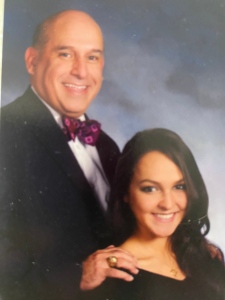






 A DAD'S JOURNEY WITH EATING DISORDERS